Brain and nervous system icon - migraine, headache and neurological symptoms assessed by an online GP at Cheshire Clinics
Treatable online

Migraine

A neurological condition, not a bad headache — and there are far more treatment options than most people are offered.

£40 · 20 minutes

Same-day availability

6am to 10pm, seven days

Assessed and treated by a GMC-registered GP

Prescriptions, sick notes and referral letters included

A written treatment plan after every appointment

Your NHS records in the room, with your consent

Clinically reviewed by Dr Mohammad Khan · Last reviewed

August 23, 2026

Book a consultation

A 20-minute appointment with a GMC-registered GP for £40. No membership required.

Private GP care led personally by Dr Mohammad Zubair Khan, GMC 7563469.

Why patients choose Cheshire Clinics

GMC registered doctors badge - every Cheshire Clinics consultation is with a General Medical Council registered GP

GMC-registered

Care led personally by Dr Khan

Royal College of General Practitioners badge - RCGP trained private GP consultations at Cheshire Clinics

RCGP-trained

Attentive, unhurried care that listens properly

Google five star reviews badge - Cheshire Clinics private GP online

Highly rated by patients

Five-star Google reviews from the people we have looked after

Care Quality Commission registered badge - Cheshire Clinics online GP service is registered with the CQC, England's independent regulator of health and social care

CQC-registered

Registered with the Care Quality Commission

Same-Day Appointments
Sick Notes
Private Prescriptions
Blood Tests
Menopause & HRT
Weight Management
Mental Health
Specialist Referrals
Same-Day Appointments
Sick Notes
Private Prescriptions
Blood Tests
Menopause & HRT
Weight Management
Mental Health
Specialist Referrals

Overview

Migraine is a neurological condition, not a severe headache. It involves changes in brain activity and the trigeminal nerve system, and the headache is only one part of it — which is why treating it as pain alone works so poorly.

It affects around one in seven people, women roughly three times as often as men, and it is one of the leading causes of years lived with disability worldwide. Despite that, migraine is substantially under-diagnosed and under-treated in the UK. A great many people manage for years on paracetamol, having never been offered a triptan or a preventive, and having never been told that painkillers taken too often are making things worse.

Two things on this page are more important than the rest.

Timing of acute treatment. Migraine slows stomach emptying early in an attack, so a tablet taken an hour in may not absorb. Taking treatment at the very first sign, in soluble form, changes outcomes dramatically.

Migraine with aura and the combined pill. If you get visual aura before your headaches, you should not take the combined oral contraceptive pill — the combination raises stroke risk. This is a firm contraindication and it is missed more often than it should be.

Common symptoms

The four phases

  • Prodrome — up to 24 hours before. Yawning, food cravings, mood change, neck stiffness, increased urination. Learning to recognise your own prodrome is genuinely useful, because treatment started at this point works best
  • Aura — in about a third of people. Typically visual: zigzag lines, flashing shapes, or a blind spot that expands over five to sixty minutes and then fully resolves. Can also be tingling spreading up an arm, or difficulty finding words. Aura builds gradually and goes away completely — sudden onset lasting symptoms is a stroke, not a migraine
  • Headache — four to 72 hours. Usually one-sided and throbbing, worse with movement, with nausea, and a strong dislike of light and sound. Most people want to lie still in a dark room
  • Postdrome — a day or so of feeling drained, foggy and washed out. Frequently mistaken for a hangover from the medication

What distinguishes it from a tension-type headache

  • Worse on movement — tension headache is not
  • Nausea — uncommon in tension headache
  • Light and sound sensitivity
  • Usually one-sided and throbbing rather than a bilateral band of pressure
  • Disabling enough to stop you functioning

Causes and risk factors

Why it happens

Migraine runs strongly in families and involves inherited differences in how the brain regulates sensory input. The current understanding centres on a wave of altered activity across the cortex — which produces aura — and activation of the trigeminal system releasing CGRP, a molecule that newer preventive drugs specifically target.

Triggers — and how they actually work

The useful concept is a threshold rather than a single cause. Most attacks follow a combination of factors on the same day, which is why a trigger seems to cause an attack sometimes and not others.

  • Sleep change in either direction. Too little, and equally, a weekend lie-in — which is why so many people get "Saturday migraines"
  • Missed or delayed meals, and dehydration
  • The let-down after stress rather than the stress itself. Attacks on the first day of a holiday are characteristic
  • Hormonal change. The fall in oestrogen just before a period is one of the strongest triggers there is, and menstrual migraine is often more severe and longer
  • Alcohol, particularly red wine
  • Weather and barometric pressure change
  • Bright or flickering light, and prolonged screen use
  • Overuse of painkillers — which is a cause rather than a consequence, and is covered below

Chocolate and cheese are widely blamed and the evidence is weak — chocolate craving is frequently part of the prodrome, so it is a symptom mistaken for a cause.

How it is diagnosed

Migraine is a clinical diagnosis, made on the pattern of attacks. There is no test for it, and scans are normal — which is worth knowing, because people often assume a normal scan means their headaches are not real or not migraine. It means neither.

What the diagnosis rests on

Recurrent attacks lasting four to 72 hours, with at least two of: one-sided, throbbing, moderate or severe, worse on movement — plus either nausea or light and sound sensitivity.

A headache diary is the most valuable diagnostic tool available, and costs nothing. Record dates, duration, severity, what you took and when, and where you were in your cycle. Over two to three months it reveals patterns nobody remembers accurately, identifies medication overuse, and shows whether a preventive is working.

When a scan is needed — and when it is not

Imaging is not indicated for typical migraine with a normal neurological examination. It is warranted where there are red flags: a change in the established pattern, onset over 50, headache worse lying down or on coughing, neurological signs that persist, or a thunderclap onset.

What else it might be

  • Medication overuse headache — which develops on top of migraine and is the commonest reason attacks become near-daily. Suspect it if you take any acute painkiller on more than 10 days a month
  • Cluster headache — excruciating, one-sided, around the eye, 15 to 180 minutes, with a watering eye and blocked nostril on that side. Sufferers pace and cannot keep still, where migraine sufferers lie down. It is frequently misdiagnosed as migraine for years
  • Tension-type headache
  • Temporal arteritis in anyone over 50 — see the urgent section, because this one threatens sight
  • Sinus disease and neck-related headache

How we treat it online

Migraine assesses well remotely. The diagnosis comes from the history, and much of what improves it — correct acute treatment, stopping overuse, starting a preventive — is a conversation and a prescription.

1. Acute treatment — and why timing decides everything

  • Take it at the very first sign. Migraine slows stomach emptying within the first hour, so a tablet taken late may simply sit there. This single point makes more difference than which drug you use
  • Soluble or dispersible forms absorb faster — soluble aspirin 900mg or dispersible ibuprofen taken early is genuinely effective and considerably better than paracetamol
  • Triptans — sumatriptan and others — are migraine-specific and first-line for moderate to severe attacks. They are not painkillers; they act on the migraine mechanism itself. Nasal sprays and dissolvable forms exist for anyone who vomits early. If one triptan does not suit you, another may — response varies considerably between them, and most people are never offered a second
  • An anti-sickness tablet such as prochlorperazine or metoclopramide, taken alongside, treats nausea and restores stomach emptying so the other drug absorbs. Adding one is one of the most useful and least used adjustments
  • The limit that matters: acute treatment on no more than two days a week. Beyond that you risk medication overuse headache

2. Preventive treatment

Worth considering with four or more attacks a month, or attacks that are disabling despite good acute treatment. Options include propranolol, amitriptyline, topiramate and candesartan. Each needs six to eight weeks at an adequate dose before judging.

Topiramate carries a specific warning: it causes serious birth defects and developmental problems, and it must not be used in pregnancy or in anyone who could become pregnant without highly effective contraception and a formal discussion.

For chronic migraine not responding to standard preventives, CGRP monoclonal antibodies have transformed outcomes. They are specialist-initiated and we refer.

3. Menstrual migraine

Where attacks cluster around your period, a short course of an NSAID or a triptan taken around that window, or continuous rather than cyclical hormonal treatment, can prevent them. This is straightforward and rarely offered unprompted.

4. The contraception point

Migraine with aura is a firm contraindication to combined hormonal contraception — the pill, patch or ring — because the combination increases ischaemic stroke risk. Progestogen-only methods, the coil and the implant are all fine. If you have aura and are on the combined pill, please raise it.

Brain and nervous system consultation - private GP assessment and imaging referral for headache and neurological symptoms at Cheshire Clinics

Ready to talk to a GP about this?

Book a consultation
Important

When to seek urgent help

Call 999 for:

  • A sudden, severe headache reaching maximum intensity within seconds to minutes — a thunderclap headache, often described as being hit on the back of the head. This may be a bleed around the brain and is an emergency regardless of whether you have migraine
  • Headache with a stiff neck, fever, dislike of light, or a rash that does not fade under a glass — possible meningitis
  • Headache with weakness, numbness, slurred speech, facial droop or confusion
  • Headache after a head injury, particularly with drowsiness or vomiting
  • A first seizure, or loss of consciousness

Seek same-day assessment for:

  • A new headache over the age of 50, particularly with scalp tenderness, jaw ache on chewing, or any visual change. This may be temporal arteritis — it threatens sight permanently, treatment is urgent, and delay costs vision
  • Aura lasting more than an hour, or neurological symptoms that do not fully resolve
  • Aura for the first time while taking the combined pill
  • Weakness on one side during a migraine, if this has not happened before
  • Headache in pregnancy with visual disturbance, swelling or upper abdominal pain — contact your maternity unit
  • Headache that is worse lying flat, on coughing or straining, or wakes you from sleep

Book a routine consultation if: attacks occur four or more times a month; over-the-counter treatment is not working; you take painkillers on more than 10 days a month; your usual pattern has changed; or migraine is affecting work, study or family life. All of those are treatable situations.

Prevention and self-care

Regularity is the single most effective strategy

The migraine brain dislikes change. Keeping things steady lowers the frequency of attacks more reliably than avoiding any particular food.

  • Same bedtime and same waking time, including weekends. A Saturday lie-in is a genuine trigger — this is not a myth
  • Do not skip meals. Eat something at regular intervals; a drop in blood sugar is a common precipitant
  • Drink water consistently through the day
  • Regular moderate exercise reduces attack frequency
  • Limit caffeine, and keep the amount consistent — caffeine withdrawal is itself a potent trigger, which is why headaches appear on holiday

Keep a diary

Two to three months of dates, severity, medication taken and cycle position. It identifies your pattern, proves or disproves suspected triggers, catches medication overuse, and is the only reliable way to tell whether a preventive is working.

During an attack

  • Treat immediately — do not wait to see whether it develops
  • A dark, quiet room; sleep often aborts an attack
  • A cold pack on the head or neck
  • Small sips of fluid

The most important thing to avoid

Do not take acute painkillers on more than two days a week. Regular use — particularly of anything containing codeine — converts episodic migraine into daily headache, and it is one of the commonest reasons migraine becomes chronic. Codeine-containing painkillers are best avoided entirely in migraine.

Supplements

Riboflavin (vitamin B2) at 400mg daily and magnesium have modest evidence for reducing frequency. They are inexpensive and low-risk, and reasonable to try alongside — not instead of — proper treatment.

NHS or private

Your NHS GP treats migraine free, and every effective treatment is NHS-funded — including the newer CGRP monoclonal antibodies, which are available through NHS neurology for people meeting NICE criteria.

Triptans are cheap generics, and sumatriptan is available over the counter from pharmacies for people with an established migraine diagnosis.

Two things are worth more than any prescription and both are free. First, a headache diary — which identifies patterns, triggers and, critically, how many days a month you are taking painkillers. Second, recognising medication overuse headache, where treating attacks on 10 or more days a month turns episodic migraine into chronic daily headache. That is extremely common, and the treatment is withdrawal rather than more medication.

The other under-used option is preventive treatment. Anyone having migraines on four or more days a month should be offered a preventer — propranolol, amitriptyline, candesartan or topiramate — and a great many people have never been offered one, cycling through acute treatment instead.

Where a private consultation earns its fee is exactly that review: are you overusing acute medication, and should you be on a preventer? That takes longer than ten minutes.

What needs urgent assessment: a sudden severe headache peaking within minutes, migraine with new neurological symptoms, or a marked change in your usual pattern.

Evidence and guidelines

NICE CG150, Headaches in over 12s, is the governing guideline. It recommends combination therapy with a triptan and an NSAID or paracetamol for acute migraine, and an antiemetic even without nausea.

CG150 recommends prophylaxis — propranolol or topiramate first-line, with amitriptyline as an option — for people with frequent or disabling attacks, and notes topiramate is teratogenic and interacts with hormonal contraception.

CG150 defines medication overuse headache and recommends abrupt withdrawal, warning that symptoms initially worsen.

NICE technology appraisals TA631, TA659, TA764 and others cover erenumab, fremanezumab, galcanezumab and rimegepant for migraine prevention, available through specialist NHS services.

FSRH and NICE guidance state that migraine with aura is a contraindication to combined hormonal contraception because of stroke risk — a point regularly missed.

Common questions

Why do painkillers not work any more?

Most likely medication overuse headache. Taking any acute painkiller on more than 10 days a month — or a triptan or codeine-containing drug on more than 10 — causes the brain to produce more headaches, not fewer. The way out is to stop the overused drug, which involves a difficult two to four weeks and then a marked improvement. It is worth doing with support rather than alone.

Do I need a brain scan?

Usually not. Typical migraine with a normal examination does not require imaging, and a scan cannot diagnose migraine — it is normal in migraine. Scanning is indicated where there are specific warning features: a changed pattern, onset over 50, headache worse lying down or on coughing, or persisting neurological signs.

Is aura dangerous?

Aura itself is not, and it fully resolves. It matters for two reasons: it must be distinguished from a stroke — aura builds over minutes and goes away, a stroke starts suddenly and persists — and aura means you should not use combined hormonal contraception, because of the stroke risk when the two combine.

Is it hormonal?

For many women, substantially. The oestrogen drop just before a period is one of the strongest triggers known, and menstrual attacks tend to be longer and more severe. Migraine often improves in pregnancy and worsens through perimenopause before settling afterwards. Targeted treatment around the period works well.

Are chocolate and cheese triggers?

Probably not in the way people think. Craving chocolate is frequently part of the prodrome — so the attack was already beginning and the chocolate got the blame. The evidence for dietary triggers generally is much weaker than for irregular sleep, missed meals and dehydration.

What if the triptan does not help?

Try taking it earlier — timing is the commonest problem. Then try a different triptan, since response varies considerably and there are several. Then add an anti-sickness tablet, which improves absorption. Most people who conclude triptans do not work for them have tried exactly one, once, taken too late.

Can migraine be cured?

Not cured, but very often well controlled — and current preventive treatment, including the newer CGRP drugs, is considerably better than what was available a decade ago. Many people find attacks become less frequent with age, and migraine commonly improves after the menopause.

Should I just push through?

No. Migraine is not something to be endured with willpower, and continuing to function through an attack tends to prolong it. Treat early, stop, rest — and if attacks are frequent enough that you are regularly having to push through, you need a preventive rather than more determination.

Dr Mohammad Zubair Khan, GMC-registered private GP and founder of Cheshire Clinics
Clinically reviewed by Dr Mohammad Zubair Khan, GMC 7563469
Last reviewed

August 23, 2026

How it works

What happens when you book

£40 for a 20-minute appointment with a GMC-registered GP, 6am to 10pm, seven days a week. Membership is optional and never required.
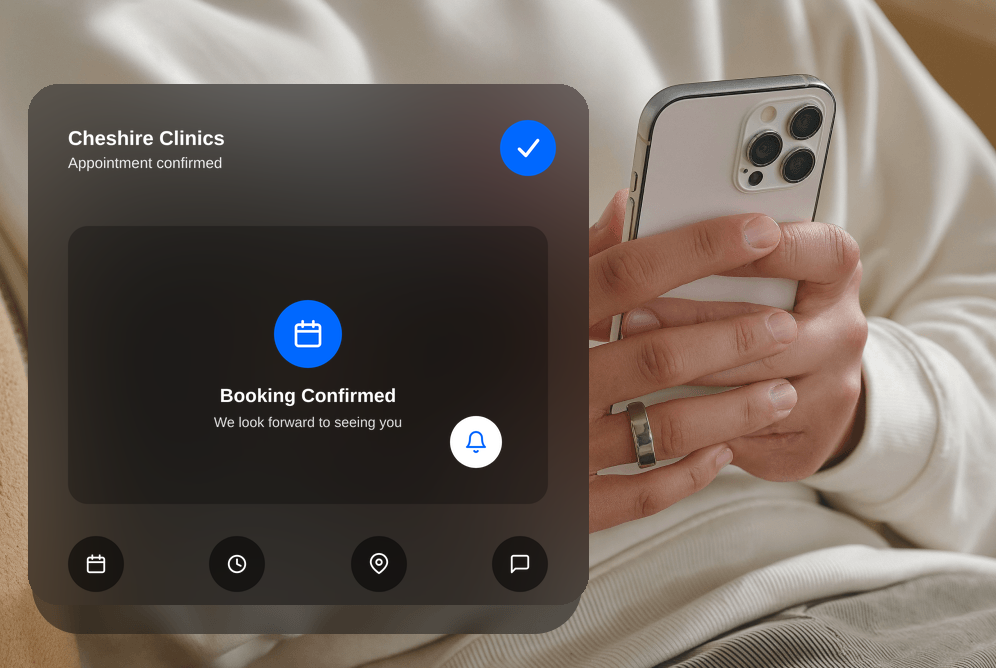
Cheshire Clinics online GP appointment booking confirmation on mobile
01

Book your appointment

Pick a time that suits you — 6am to 10pm, seven days a week, including weekends and bank holidays. £40 for 20 minutes, self-pay, with no insurance to arrange.
5–10 minutes
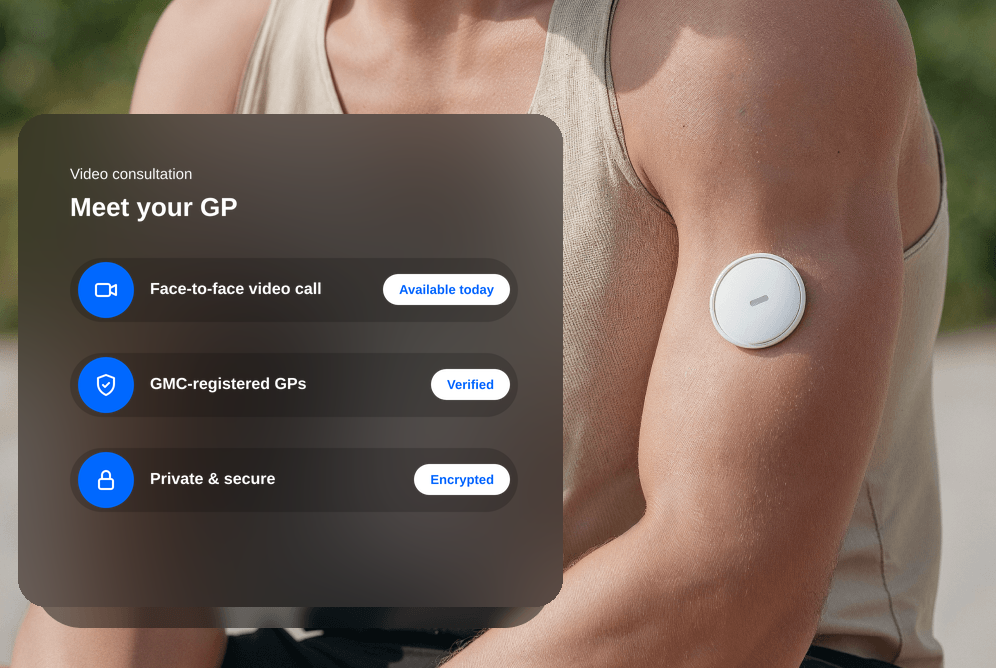
Online video consultation with a GMC-registered private GP
02

Meet your GP

A 20-minute video or phone consultation with a GMC-registered GP — long enough for a proper conversation about your symptoms, your history and what matters to you.
20 minutes
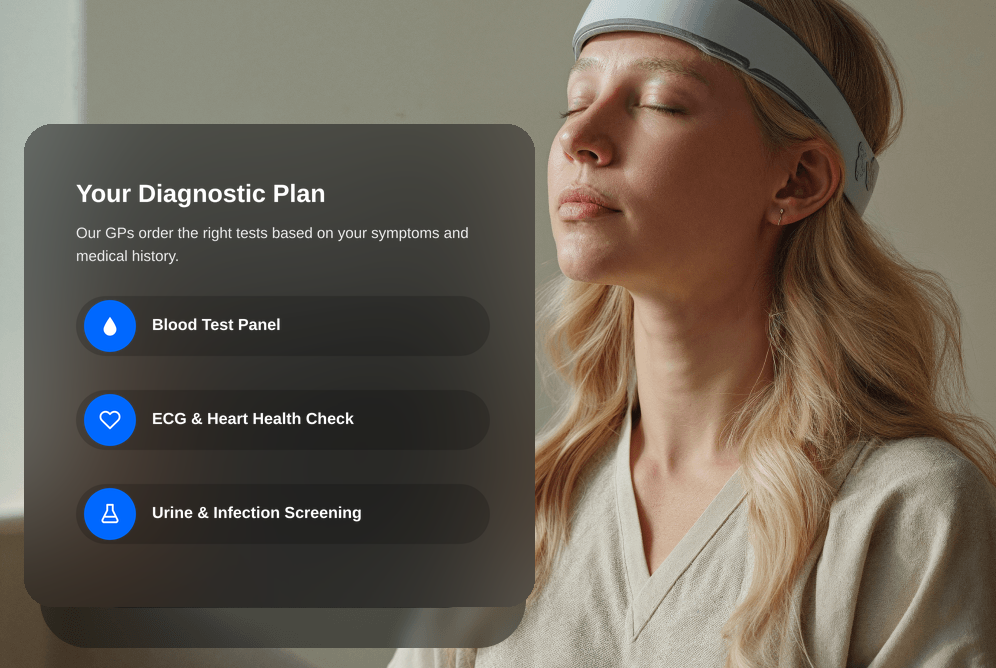
Diagnostic testing plan including blood test panel, ECG and urine screening
03

Tests and referrals, if you need them

Where testing will actually answer the question, we arrange it — blood tests and health screening through our laboratory partner, or a referral for ultrasound, X-ray, CT or MRI through private imaging providers. We will also tell you when a scan is not the right next step.
1–7 days
Personalised results and treatment plan from a private GP consultation
04

Results and next steps

Your GP talks you through what the results mean and agrees the next step with you. Every consultation ends with your treatment plan in writing, and any prescription goes to your own pharmacy.
20 minutes
GP follow-up reminder for ongoing care and progress monitoring
05

Ongoing care and follow-up

Follow-up appointments, progress monitoring and ongoing advice — including saying plainly when something needs in-person or NHS care instead.

Ongoing

How we compare

Time to be seen

Appointment length

Your NHS record in the room

Written treatment plan

Told when a test isn’t needed

Cost

Varies by practice

Typically 10 minutes

Yes, your full record

Not routinely

Usually

Free

Same day

Often 10 to 15 minutes

Usually not

Sometimes charged

Varies by provider

Often a subscription

Questions about our service

How quickly can I be seen?

Same-day access is usually available, from 6am to 10pm, seven days a week. You choose a time that suits you rather than waiting on hold at 8am.

Will I see the same doctor each time?

Yes. Care is led personally by Dr Mohammad Khan, so you are not passed between clinicians. Continuity is the point of a small practice: someone who knows your history and is listening attentively rather than working through a checklist.

Can you see my NHS records?

Yes, with your consent. We can access your Summary Care Record during the consultation, so your current medications, allergies and significant history are in the room. That means fewer questions you have already answered elsewhere, and safer prescribing.

Are you trying to replace my NHS GP?

No. We are not here to replace GPs, only to support them. Your NHS practice remains responsible for your ongoing care, and with your consent we write to them after the consultation. We are useful when you need to be seen sooner, or want more time than a standard appointment allows.

What is included in the appointment?

Twenty unhurried minutes and a comprehensive assessment. A written treatment plan is included, along with any prescription, sick note or referral letter arising from the consultation, at no extra charge.

How much does it cost?

£40 for 20 minutes, self-pay. Membership is optional and never required. Priced for fairness, because we are not here to charge extortionate amounts for access to a doctor.

What does “treatable online” actually mean?

It means the diagnosis can usually be made from your history and photographs, and that treatment can be arranged safely without examining you. Where a condition is not marked treatable online, it is because examination is the diagnosis — listening to a chest, feeling an abdomen, examining an ear or a joint — or because a procedure or device is needed.

Can you prescribe antibiotics?

Yes, where there is a genuine bacterial infection — cellulitis, impetigo, bacterial urine infections, confirmed strep throat. We will also frequently tell you that you do not need one. Most sore throats, coughs, colds and earaches are viral, and an antibiotic gives you the side effects with none of the benefit.

What if the GP cannot help with what I need?

If your problem turns out to be genuinely outside what we can do remotely, the doctor will tell you straight away, point you to the right service, and refund your fee in full. We would rather do that than fill twenty minutes to justify the charge.

What should I do in an emergency?

Call 999 or go to A&E — do not book an online appointment and do not wait for a reply to an email. For urgent problems that are not emergencies, NHS 111 is available 24 hours a day, online or by phone, and can direct you to the right service.

Patient reviews

What our patients say

No reviews published yet.
Ready to see a GP?20 minutes with a GMC-registered doctor. £40, usually same day.
Book a consultation