Brain and nervous system icon - migraine, headache and neurological symptoms assessed by an online GP at Cheshire Clinics

Concussion

Most settle within two weeks. Prolonged complete rest slows recovery, and returning to sport too early is the real risk.

£40 · 20 minutes

Same-day availability

6am to 10pm, seven days

Assessed and treated by a GMC-registered GP

Prescriptions, sick notes and referral letters included

A written treatment plan after every appointment

Your NHS records in the room, with your consent

Clinically reviewed by Dr Mohammad Khan · Last reviewed

September 8, 2026

Book a consultation

A 20-minute appointment with a GMC-registered GP for £40. No membership required.

Private GP care led personally by Dr Mohammad Zubair Khan, GMC 7563469.

Why patients choose Cheshire Clinics

GMC registered doctors badge - every Cheshire Clinics consultation is with a General Medical Council registered GP

GMC-registered

Care led personally by Dr Khan

Royal College of General Practitioners badge - RCGP trained private GP consultations at Cheshire Clinics

RCGP-trained

Attentive, unhurried care that listens properly

Google five star reviews badge - Cheshire Clinics private GP online

Highly rated by patients

Five-star Google reviews from the people we have looked after

Care Quality Commission registered badge - Cheshire Clinics online GP service is registered with the CQC, England's independent regulator of health and social care

CQC-registered

Registered with the Care Quality Commission

Same-Day Appointments
Sick Notes
Private Prescriptions
Blood Tests
Menopause & HRT
Weight Management
Mental Health
Specialist Referrals
Same-Day Appointments
Sick Notes
Private Prescriptions
Blood Tests
Menopause & HRT
Weight Management
Mental Health
Specialist Referrals

Overview

Concussion is a temporary disturbance of brain function caused by a blow to the head or body that transmits force to the brain. It is a functional injury rather than a structural one — which is why scans are usually normal, and why a normal scan does not mean nothing happened.

You do not need to lose consciousness to have a concussion. Most people do not. Feeling dazed, foggy or "not right" after a knock is enough.

Most people recover within two weeks, and most children within four.

Two things have changed in recent years and are worth knowing. First, prolonged complete rest in a dark room is no longer recommended and probably slows recovery. Second, return-to-sport protocols are considerably stricter than most people assume, because a second impact before recovery is genuinely dangerous.

Common symptoms

Immediately or within hours

  • Feeling dazed, stunned or "not quite right"
  • Headache, dizziness, nausea
  • Confusion, or memory gaps around the event
  • Blurred or double vision
  • Sensitivity to light or noise
  • Balance problems
  • Brief loss of consciousness — in a minority

Over the following days

  • Persistent headache — the commonest
  • Difficulty concentrating, or a sense of mental fog
  • Fatigue, and sleeping more or less than usual
  • Irritability, low mood, or feeling emotional
  • Slowed thinking, or difficulty finding words

In children

Watch for behaviour change rather than a described symptom — unusual irritability, being unsettled, going off food, or losing interest in favourite things.

Causes and risk factors

  • Sport — rugby, football, boxing, cycling, equestrian sports
  • Falls — the commonest cause overall, particularly in children and older adults
  • Road traffic collisions
  • Assaults
  • Any blow to the body that whips the head, even without direct head contact

What increases risk or slows recovery

  • Previous concussion, particularly recent — and this is the important one
  • A history of migraine
  • Pre-existing anxiety, depression or learning difficulties
  • Being on anticoagulants — which raises the risk of bleeding, not concussion
  • Age — children and older adults take longer

How it is diagnosed

Concussion is a clinical diagnosis made on the history and the symptoms. There is no blood test and no scan that confirms it.

CT scans in head injury are done to exclude bleeding, not to diagnose concussion. That is a distinction people find genuinely confusing — a normal CT is reassuring about a bleed and says nothing about whether you are concussed.

NICE sets out specific criteria for who needs a CT scan, including loss of consciousness with certain features, repeated vomiting, seizure, suspected skull fracture, focal neurological signs, and anyone on an anticoagulant — who should be assessed even after apparently minor head injury.

Assessment needs to be in person. Pupils, coordination, balance and neurological examination all matter and none of them can be done over video.

How we treat it online

We have marked this as not treatable online, and that is deliberate.

An acute head injury needs in-person assessment — examination, and a decision about whether a CT scan is required. That is an urgent care or A&E job, and it is free on the NHS. We would be doing you a disservice by taking a fee to look at you over video.

Where we are genuinely useful

Afterwards, once serious injury has been excluded:

  • Symptoms persisting beyond two weeks, where the picture becomes about graded return to activity, sleep, headache management and mood
  • Return-to-work planning, including phased return and fit notes
  • Return-to-study advice for students, where screen time and exam arrangements matter
  • Onward referral where symptoms are not settling

Persistent post-concussion symptoms are real, are commonly dismissed, and respond better to structured graded activity than to being told to rest and wait.

Brain and nervous system consultation - private GP assessment and imaging referral for headache and neurological symptoms at Cheshire Clinics
Important

When to seek urgent help

Call 999 or go to A&E immediately for

  • Loss of consciousness, even briefly
  • Increasing drowsiness, or difficulty waking someone
  • Repeated vomiting
  • A seizure or fit
  • Weakness, numbness, or problems speaking or understanding
  • Clear fluid or blood from the nose or ears
  • A headache that keeps getting worse
  • Unequal pupils, or double vision that persists
  • Confusion or odd behaviour that is not improving
  • Any head injury in someone taking an anticoagulant such as warfarin, apixaban or rivaroxaban

Also go to A&E for

  • Any head injury in a baby or young child that concerns you
  • Head injury with alcohol or drugs involved, where symptoms are hard to interpret
  • A significant mechanism — a fall from height, a cycling accident, a road collision

Do not drive yourself.

Prevention and self-care

The first 48 hours

  • Relative rest, not complete rest. Two days of reduced activity, then start gradually increasing. Lying in a dark room for a week makes recovery slower, not faster
  • Someone should stay with you for the first 24 hours
  • No alcohol
  • Paracetamol for headache — avoid ibuprofen and aspirin in the first 24 to 48 hours because of bleeding risk
  • No driving until symptoms have settled

Returning to normal

Increase activity gradually, guided by symptoms. A mild, brief increase in symptoms during activity is acceptable; a marked or lasting worsening means you have gone too far, so step back and progress more slowly.

Screens, reading and concentration count as activity — build them up in the same graded way.

Return to sport — the UK guidance

The UK concussion guidance for grassroots sport is deliberately cautious: If in doubt, sit them out.

  • Minimum 14 days symptom-free before returning to contact training, and at least 21 days from the injury before returning to competition
  • A graded return, one stage per day at minimum, dropping back a stage if symptoms return
  • Children and adolescents progress more slowly still

The reason is second impact syndrome — a further head injury before recovery is complete can cause catastrophic brain swelling. It is rare, and it is why the rules are strict.

NHS or private

Acute head injury is entirely NHS territory, and it is free, fast and appropriate. A&E and urgent treatment centres assess head injuries around the clock and decide about CT scanning against national criteria. Nothing private improves on that, and we will not pretend otherwise.

Do not pay for a private scan to "check" a head injury. Scans in head injury are for excluding bleeding, which is an emergency decision made on clinical criteria — not something to arrange privately over the following days.

Where private care has a legitimate role is the recovery phase:

  • Symptoms persisting past two weeks, where an unhurried appointment to plan graded return is genuinely valuable and NHS follow-up is often limited
  • Fit notes and phased return to work
  • Faster access to neurology or specialist concussion rehabilitation where recovery has stalled

Free and worth knowing: the UK Concussion Guidelines for Non-Elite Sport are published openly, and the Headway charity provides excellent free information and a helpline.

Evidence and guidelines

This page follows NICE NG232 on head injury: assessment and early management, including the criteria for CT scanning and the specific guidance on anyone taking anticoagulants.

The return-to-sport advice follows the UK Concussion Guidelines for Non-Elite (Grassroots) Sport — the "If in doubt, sit them out" framework, with its 14-day symptom-free and 21-day minimum competition thresholds, and slower progression for children.

The move away from prolonged complete rest reflects the international consensus statements on concussion in sport, which now support relative rest for 24 to 48 hours followed by graded sub-symptom-threshold activity.

The advice to avoid NSAIDs in the first 24 to 48 hours is standard UK head injury practice, on the basis of bleeding risk.

Common questions

Do I have to lose consciousness to be concussed?

No, and most people do not. Feeling dazed, foggy or "not right" after a knock is enough.

Should I rest completely in a dark room?

No — that advice has changed. Two days of relative rest, then gradual increase in activity. Prolonged complete rest is associated with slower recovery.

Does a normal CT scan mean I am fine?

It means there is no bleed, which is the important thing it is looking for. Concussion does not show on a CT, so a normal scan does not mean you are not concussed.

When can I go back to sport?

UK grassroots guidance is at least 14 days symptom-free before contact training, and a minimum of 21 days from injury before competition — longer for children. It is stricter than most people expect, and the reason is second impact syndrome.

How long will I feel like this?

Most adults recover within two weeks and most children within four. A minority have symptoms for longer, which is recognised and treatable — not imagined.

Can I take ibuprofen?

Use paracetamol in the first 24 to 48 hours and avoid ibuprofen and aspirin, because of bleeding risk. After that ibuprofen is usually fine.

Can I drive?

Not until symptoms have settled. Concentration, reaction time and vision are all affected, often more than you realise.

Dr Mohammad Zubair Khan, GMC-registered private GP and founder of Cheshire Clinics
Clinically reviewed by Dr Mohammad Zubair Khan, GMC 7563469
Last reviewed

September 8, 2026

How it works

What happens when you book

£40 for a 20-minute appointment with a GMC-registered GP, 6am to 10pm, seven days a week. Membership is optional and never required.
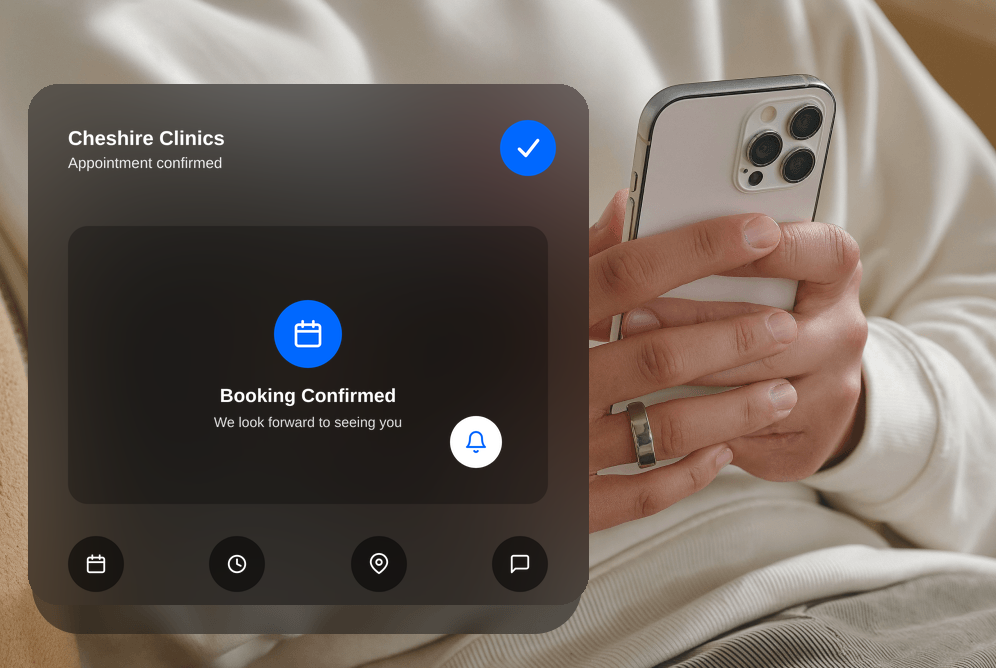
Cheshire Clinics online GP appointment booking confirmation on mobile
01

Book your appointment

Pick a time that suits you — 6am to 10pm, seven days a week, including weekends and bank holidays. £40 for 20 minutes, self-pay, with no insurance to arrange.
5–10 minutes
Online video consultation with a GMC-registered private GP
02

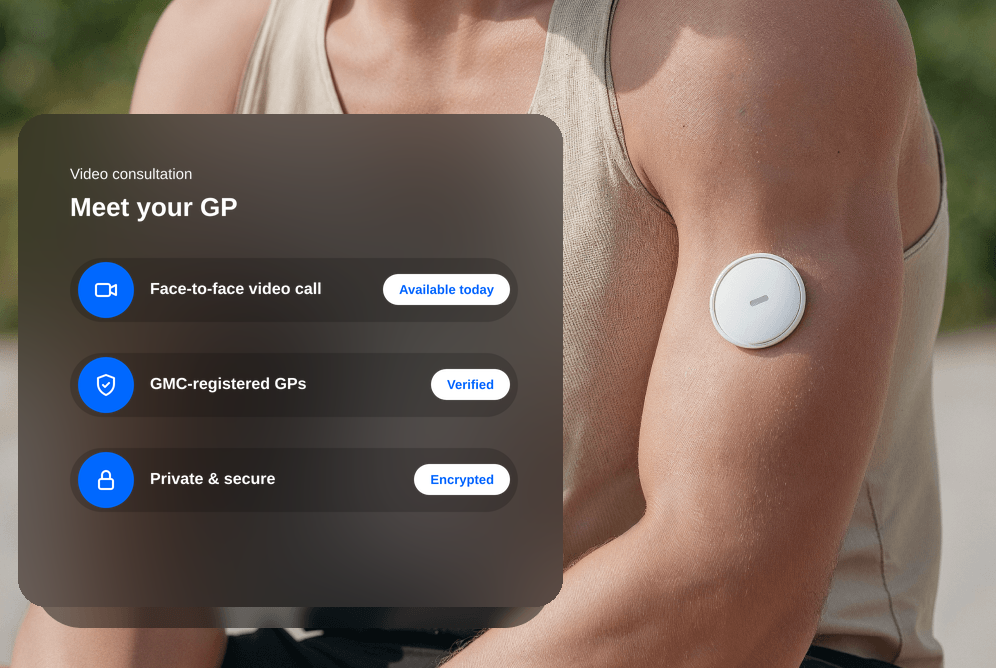
Meet your GP

A 20-minute video or phone consultation with a GMC-registered GP — long enough for a proper conversation about your symptoms, your history and what matters to you.
20 minutes
Diagnostic testing plan including blood test panel, ECG and urine screening
03

Tests and referrals, if you need them

Where testing will actually answer the question, we arrange it — blood tests and health screening through our laboratory partner, or a referral for ultrasound, X-ray, CT or MRI through private imaging providers. We will also tell you when a scan is not the right next step.
1–7 days
Personalised results and treatment plan from a private GP consultation
04

Results and next steps

Your GP talks you through what the results mean and agrees the next step with you. Every consultation ends with your treatment plan in writing, and any prescription goes to your own pharmacy.
20 minutes
GP follow-up reminder for ongoing care and progress monitoring
05

Ongoing care and follow-up

Follow-up appointments, progress monitoring and ongoing advice — including saying plainly when something needs in-person or NHS care instead.

Ongoing

How we compare

Time to be seen

Appointment length

Your NHS record in the room

Written treatment plan

Told when a test isn’t needed

Cost

Varies by practice

Typically 10 minutes

Yes, your full record

Not routinely

Usually

Free

Same day

Often 10 to 15 minutes

Usually not

Sometimes charged

Varies by provider

Often a subscription

Questions about our service

How quickly can I be seen?

Same-day access is usually available, from 6am to 10pm, seven days a week. You choose a time that suits you rather than waiting on hold at 8am.

Will I see the same doctor each time?

Yes. Care is led personally by Dr Mohammad Khan, so you are not passed between clinicians. Continuity is the point of a small practice: someone who knows your history and is listening attentively rather than working through a checklist.

Can you see my NHS records?

Yes, with your consent. We can access your Summary Care Record during the consultation, so your current medications, allergies and significant history are in the room. That means fewer questions you have already answered elsewhere, and safer prescribing.

Are you trying to replace my NHS GP?

No. We are not here to replace GPs, only to support them. Your NHS practice remains responsible for your ongoing care, and with your consent we write to them after the consultation. We are useful when you need to be seen sooner, or want more time than a standard appointment allows.

What is included in the appointment?

Twenty unhurried minutes and a comprehensive assessment. A written treatment plan is included, along with any prescription, sick note or referral letter arising from the consultation, at no extra charge.

How much does it cost?

£40 for 20 minutes, self-pay. Membership is optional and never required. Priced for fairness, because we are not here to charge extortionate amounts for access to a doctor.

What does “treatable online” actually mean?

It means the diagnosis can usually be made from your history and photographs, and that treatment can be arranged safely without examining you. Where a condition is not marked treatable online, it is because examination is the diagnosis — listening to a chest, feeling an abdomen, examining an ear or a joint — or because a procedure or device is needed.

Can you prescribe antibiotics?

Yes, where there is a genuine bacterial infection — cellulitis, impetigo, bacterial urine infections, confirmed strep throat. We will also frequently tell you that you do not need one. Most sore throats, coughs, colds and earaches are viral, and an antibiotic gives you the side effects with none of the benefit.

What if the GP cannot help with what I need?

If your problem turns out to be genuinely outside what we can do remotely, the doctor will tell you straight away, point you to the right service, and refund your fee in full. We would rather do that than fill twenty minutes to justify the charge.

What should I do in an emergency?

Call 999 or go to A&E — do not book an online appointment and do not wait for a reply to an email. For urgent problems that are not emergencies, NHS 111 is available 24 hours a day, online or by phone, and can direct you to the right service.

Patient reviews

What our patients say

No reviews published yet.
Ready to see a GP?20 minutes with a GMC-registered doctor. £40, usually same day.
Book a consultation