Travel and preventive health icon - insect bites, Lyme disease and travel advice from an online GP at Cheshire Clinics
Treatable online

Malaria

A fever after travel is an emergency until a blood test says otherwise. Most UK deaths are in people visiting family abroad.

£40 · 20 minutes

Same-day availability

6am to 10pm, seven days

Assessed and treated by a GMC-registered GP

Prescriptions, sick notes and referral letters included

A written treatment plan after every appointment

Your NHS records in the room, with your consent

Clinically reviewed by Dr Mohammad Khan · Last reviewed

August 30, 2026

Book a consultation

A 20-minute appointment with a GMC-registered GP for £40. No membership required.

Private GP care led personally by Dr Mohammad Zubair Khan, GMC 7563469.

Why patients choose Cheshire Clinics

GMC registered doctors badge - every Cheshire Clinics consultation is with a General Medical Council registered GP

GMC-registered

Care led personally by Dr Khan

Royal College of General Practitioners badge - RCGP trained private GP consultations at Cheshire Clinics

RCGP-trained

Attentive, unhurried care that listens properly

Google five star reviews badge - Cheshire Clinics private GP online

Highly rated by patients

Five-star Google reviews from the people we have looked after

Care Quality Commission registered badge - Cheshire Clinics online GP service is registered with the CQC, England's independent regulator of health and social care

CQC-registered

Registered with the Care Quality Commission

Same-Day Appointments
Sick Notes
Private Prescriptions
Blood Tests
Menopause & HRT
Weight Management
Mental Health
Specialist Referrals
Same-Day Appointments
Sick Notes
Private Prescriptions
Blood Tests
Menopause & HRT
Weight Management
Mental Health
Specialist Referrals

Overview

Malaria is a parasitic infection spread by the bite of infected mosquitoes. It kills hundreds of thousands of people worldwide every year, and it still kills people in the UK — almost always people who were recently abroad.

The single most important sentence on this page: any fever within a year of travel to a malaria area is malaria until a blood test proves otherwise. Falciparum malaria, the most dangerous type, can progress from feeling flu-like to critical illness in under 24 hours. It does not wait for an appointment.

The second most important point is about who actually dies from it in the UK. Most UK malaria cases — and most deaths — are in people travelling to visit friends and family in countries where they or their parents grew up. The reasoning is understandable: you lived there, you never took anything, you were fine. But any partial immunity from childhood exposure fades within a couple of years of leaving, and returning as an adult after years in the UK means returning without protection.

Prophylaxis is not for tourists. It is for anyone going.

Common symptoms

Malaria has no distinctive symptoms. That is precisely why it is dangerous. It looks like flu, and people treat it as flu.

  • Fever, sometimes cyclical but often not — do not wait for a pattern
  • Shivering, sweating, chills
  • Headache, muscle aches
  • Fatigue
  • Nausea, vomiting, diarrhoea, abdominal pain
  • Cough
  • Loss of appetite

The timing

Usually 7 to 18 days after being bitten, but falciparum can appear up to a year later, and vivax and ovale can emerge months or even years afterwards because they lie dormant in the liver.

Symptoms starting less than a week after arriving somewhere are not malaria — the parasite needs longer than that — but they are still worth assessing.

Severe malaria — 999

  • Confusion, drowsiness, or seizures
  • Difficulty breathing
  • Jaundice — yellow skin or eyes
  • Passing very dark urine, or very little
  • Bleeding or unusual bruising
  • Collapse

In children, deterioration can be extremely fast. A feverish child recently back from a malaria area is an emergency assessment, not a wait-and-see.

Causes and risk factors

  • Plasmodium parasites, transmitted by female Anopheles mosquitoes, which bite between dusk and dawn
  • P. falciparum — the dangerous one, dominant in sub-Saharan Africa, and responsible for almost all UK deaths
  • P. vivax and P. ovale — can lie dormant in the liver and relapse months or years later
  • P. malariae and P. knowlesi

Where the risk is

Sub-Saharan Africa accounts for the overwhelming majority of cases and deaths. Also South and South East Asia, parts of Central and South America, Papua New Guinea and the Pacific. Risk varies by region, altitude and season, which is why advice must be destination-specific rather than country-wide.

Who is at greatest risk

  • People visiting friends and relatives — the largest group of UK cases by a wide margin, and the least likely to take prophylaxis
  • Anyone who has not taken prophylaxis, or has taken it inconsistently
  • Pregnant women, in whom malaria is considerably more dangerous
  • Young children
  • People without a spleen, or who are immunosuppressed
  • Longer stays, rural travel, and the rainy season

How it is diagnosed

Blood films, urgently

Thick and thin blood films examined under a microscope remain the standard. The thick film detects the parasite; the thin film identifies the species and how heavy the infection is, both of which determine treatment.

A single negative film does not exclude malaria. Where suspicion remains, films are repeated — typically three over consecutive days, since parasites are released in cycles and may be scarce between them. Being sent home on one negative result is a recognised route to a missed diagnosis.

Rapid diagnostic tests

Useful and quick, and used alongside microscopy rather than instead of it. They can miss low-level infection and do not quantify the parasite load.

Also checked

Full blood count (low platelets are a strong pointer), kidney and liver function, glucose and lactate.

What else causes fever after travel

Dengue, typhoid, hepatitis A, rickettsial infection, schistosomiasis, HIV seroconversion, amoebic liver abscess, and viral haemorrhagic fevers in specific circumstances. Also, of course, an ordinary UK virus — but that is the diagnosis you reach after excluding malaria, not before.

Why the travel history has to be volunteered

Say where you went and when, unprompted, at the start. The single commonest reason malaria is missed in the UK is that nobody asked and nobody said.

How we treat it online

If you have a fever after travel — this is not an online consultation

Go to A&E or call 111 today. You need a blood film, and you need it the same day. We will tell you that immediately and refund the fee rather than take a booking.

This is not defensive practice. Falciparum malaria can kill in 24 hours, and the diagnosis requires microscopy that no remote service can perform.

Where we are genuinely useful — before you go

  • Destination-specific risk assessment. Malaria risk varies by region within a country, by altitude and by season. Blanket country advice is not good enough
  • Prescribing the right prophylaxis — atovaquone with proguanil, doxycycline or mefloquine, chosen for the destination's resistance pattern, your other medicines and how long you are away
  • The conversation people visiting family need to have. If you grew up somewhere malarial and are going back, your childhood immunity has gone. This is the single most valuable thing on this page and it is rarely said directly
  • Bite avoidance — which matters as much as the tablets, since no prophylaxis is completely protective
  • Pregnancy and children, where drug choice is more constrained and the risk is higher
  • A letter for carrying medication, included in the consultation fee
  • Advice for the year after you return — what to do, and what to say, if you develop a fever
Travel and preventive health consultation with a private GP - vaccinations, travel advice and health screening at Cheshire Clinics

Ready to talk to a GP about this?

Book a consultation
Important

When to seek urgent help

Same-day assessment — no exceptions

Any fever, or feeling generally unwell, within a year of travel to a malaria area. Go to A&E or call 111, and say clearly that you have been to a malaria area and when.

That sentence is what triggers the blood film. Without it, you may be assessed as having a viral illness and sent home.

Call 999 for

  • Confusion, drowsiness or seizures
  • Difficulty breathing
  • Jaundice, or very dark urine
  • Collapse, or being unable to stand
  • Bleeding or extensive bruising
  • Any feverish child recently back from a malaria area

Do not be reassured by

  • Having taken prophylaxis. It reduces risk substantially but does not eliminate it
  • A negative test. A single negative blood film does not exclude malaria — three films over consecutive days may be needed
  • Having grown up in a malaria area
  • The fever settling on its own. Malaria fevers come and go, and the gap between them is not recovery

Prevention and self-care

The four parts, and all four matter

Awareness of risk. Bite avoidance. Chemoprophylaxis. Prompt diagnosis. Tablets alone are not a strategy — no prophylaxis is completely effective.

Avoiding bites, dusk to dawn

  • Insect repellent containing 50% DEET on exposed skin, reapplied as directed. Apply sunscreen first, then repellent
  • Cover up after dark — long sleeves, long trousers, socks
  • Sleep under an insecticide-treated net if the room is not properly screened or air-conditioned, and check it for holes
  • Consider treating clothing with permethrin
  • Air conditioning and screens where available

Taking the tablets properly

  • Start before you travel — the lead-in varies by drug, and mefloquine needs two to three weeks so that side effects can be identified before departure
  • Take them consistently, at the same time, with food where advised
  • Finish the course after you get home. This is the step most often skipped and it matters — for doxycycline and mefloquine it is four weeks after leaving the area
  • Doxycycline causes sun sensitivity, which needs planning for in a hot country
  • Take a spare supply, in case of vomiting or delays

If you are visiting family

Please take prophylaxis. Growing up somewhere malarial gave you partial immunity, and it fades within a year or two of leaving. Children born here have none at all.

This group makes up the majority of UK malaria cases and deaths, and the reason is almost always the entirely reasonable belief that it was never needed before.

On vaccines

The malaria vaccines now in use are for children living in high-transmission areas, and are not available or recommended for UK travellers. There is no travel malaria vaccine — prophylaxis and bite avoidance remain the protection.

NHS or private

What is NHS, and what is not

  • Emergency assessment and treatment of malaria is free and urgent on the NHS. Blood films, admission, intravenous treatment — all of it. Never delay because of cost
  • Some travel vaccines are free at NHS GP practices, including typhoid, hepatitis A, cholera and combined vaccines
  • Malaria prophylaxis is generally not available on NHS prescription — travel prophylaxis is excluded, so it is a private prescription or an over-the-counter purchase wherever you get it
  • Some practices no longer offer travel appointments at all, which is why travel clinics exist

Atovaquone with proguanil is available from pharmacies without a prescription after a consultation with the pharmacist, which is often the cheapest route for a straightforward trip. We would rather tell you that than take a fee.

Where paying for a consultation helps

  • Complicated itineraries — several countries, varying resistance patterns, rural or seasonal risk
  • Existing medication or health conditions, where drug choice is constrained. Mefloquine in particular is avoided with a history of depression, anxiety or seizures
  • Pregnancy, or travelling with young children
  • People visiting family, where the conversation is as important as the prescription
  • Last-minute travel, where you need advice and a prescription today
  • A letter to carry medication, included in the fee

Evidence and guidelines

This page follows UK Health Security Agency guidelines for malaria prevention in travellers from the UK, alongside NICE Clinical Knowledge Summaries and NaTHNaC / TravelHealthPro country guidance.

What the guidance actually says

  • Malaria prevention rests on the ABCD framework: Awareness of risk, Bite prevention, Chemoprophylaxis, and prompt Diagnosis and treatment
  • Consider malaria in any person with fever, or a history of fever, who has returned from a malaria-endemic area within the previous 12 months — and investigate as an emergency
  • Falciparum malaria is a medical emergency and can be rapidly fatal. Assessment and blood films should occur the same day
  • A single negative blood film does not exclude malaria. Repeat films are required where clinical suspicion persists
  • Chemoprophylaxis choice should be destination-specific, reflecting local resistance patterns, and take account of the traveller's medical history and medication
  • Prophylaxis must be continued after leaving the endemic area for the period specified for that drug
  • No chemoprophylaxis regimen is 100% effective, so bite avoidance remains essential
  • Mefloquine is contraindicated where there is a history of psychiatric illness or seizures, and should be started well before travel

On travellers visiting friends and relatives

UKHSA identifies travellers visiting friends and relatives as the group accounting for the majority of imported UK malaria cases, and notes that semi-immunity acquired in childhood wanes rapidly after leaving an endemic area. Targeted advice to this group is specifically recommended.

Reviewed against UKHSA malaria prevention guidelines, NICE CKS and NaTHNaC guidance current at the date shown above. Destination-specific risk changes — check TravelHealthPro before each trip.

Common questions

I grew up there and never took anything. Do I need to now?

Yes — and this is the most important question on the page. Partial immunity from childhood exposure fades within a year or two of leaving.

Travellers visiting friends and family account for most UK malaria cases and deaths, almost always for exactly this reason. Your children, born here, have no immunity at all.

I have a fever and I was abroad last month. What do I do?

Go to A&E or call 111 today, and say where you went and when.

Do not book a routine appointment, and do not wait to see if it settles. Falciparum malaria can become critical within 24 hours.

I took the tablets. Am I safe?

Much safer, but not immune. No prophylaxis is completely effective.

A fever after travel still needs testing, even if you took every dose.

My blood test was negative. Is that the end of it?

Not necessarily. A single negative film does not exclude malaria, and repeat films over consecutive days may be needed.

If you are still feverish, go back.

Is there a vaccine I can have?

Not for travellers. The malaria vaccines in use are for children in high-transmission countries.

Tablets and bite avoidance remain the protection for anyone travelling from the UK.

Which tablets should I take?

It depends entirely on where you are going. Resistance patterns differ by region, and the right choice also depends on your other medicines and health.

Country-level advice is not enough — risk varies within countries by area, altitude and season.

Do I really have to keep taking them after I get home?

Yes, and this is the step most often abandoned. The parasite can still be developing in your liver after you return.

For doxycycline and mefloquine that is four weeks after leaving the area.

Can I get them on the NHS?

Not usually — travel prophylaxis is excluded from NHS prescribing.

Atovaquone with proguanil can be bought from a pharmacy after a consultation, which is often the cheapest route for a simple trip.

Are the mosquito nets and repellent really necessary if I am on tablets?

Yes. Prophylaxis is not complete protection, and bite avoidance is half the strategy.

Malaria mosquitoes bite between dusk and dawn, so that is when cover, repellent and nets matter most.

Dr Mohammad Zubair Khan, GMC-registered private GP and founder of Cheshire Clinics
Clinically reviewed by Dr Mohammad Zubair Khan, GMC 7563469
Last reviewed

August 30, 2026

How it works

What happens when you book

£40 for a 20-minute appointment with a GMC-registered GP, 6am to 10pm, seven days a week. Membership is optional and never required.
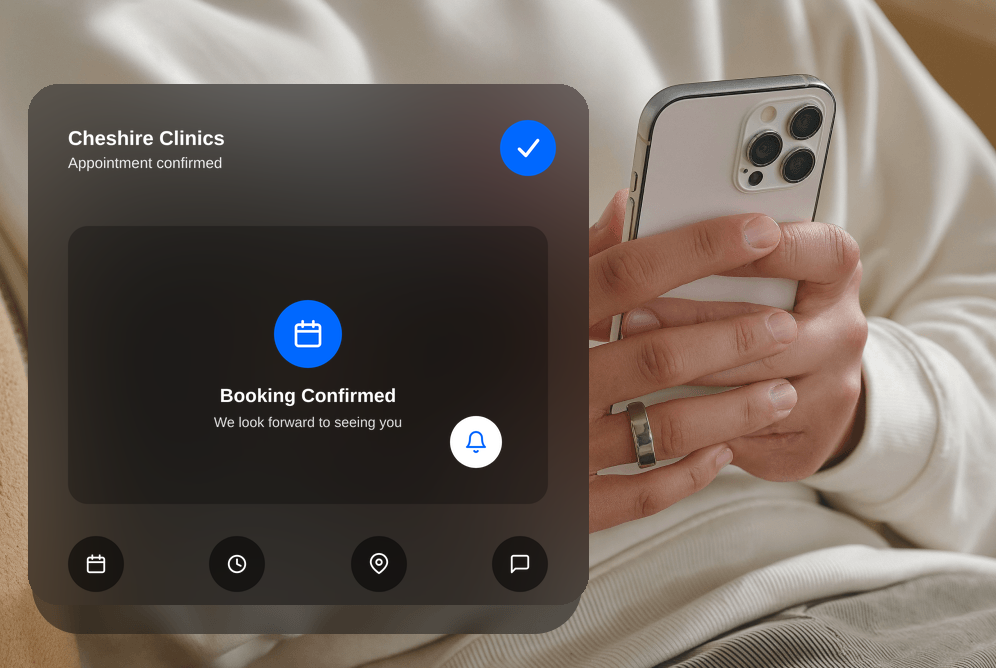
Cheshire Clinics online GP appointment booking confirmation on mobile
01

Book your appointment

Pick a time that suits you — 6am to 10pm, seven days a week, including weekends and bank holidays. £40 for 20 minutes, self-pay, with no insurance to arrange.
5–10 minutes
Online video consultation with a GMC-registered private GP
02

Meet your GP

A 20-minute video or phone consultation with a GMC-registered GP — long enough for a proper conversation about your symptoms, your history and what matters to you.
20 minutes
Diagnostic testing plan including blood test panel, ECG and urine screening
03

Tests and referrals, if you need them

Where testing will actually answer the question, we arrange it — blood tests and health screening through our laboratory partner, or a referral for ultrasound, X-ray, CT or MRI through private imaging providers. We will also tell you when a scan is not the right next step.
1–7 days
Personalised results and treatment plan from a private GP consultation
04

Results and next steps

Your GP talks you through what the results mean and agrees the next step with you. Every consultation ends with your treatment plan in writing, and any prescription goes to your own pharmacy.
20 minutes
GP follow-up reminder for ongoing care and progress monitoring
05

Ongoing care and follow-up

Follow-up appointments, progress monitoring and ongoing advice — including saying plainly when something needs in-person or NHS care instead.

Ongoing

How we compare

Time to be seen

Appointment length

Your NHS record in the room

Written treatment plan

Told when a test isn’t needed

Cost

Varies by practice

Typically 10 minutes

Yes, your full record

Not routinely

Usually

Free

Same day

Often 10 to 15 minutes

Usually not

Sometimes charged

Varies by provider

Often a subscription

Questions about our service

How quickly can I be seen?

Same-day access is usually available, from 6am to 10pm, seven days a week. You choose a time that suits you rather than waiting on hold at 8am.

Will I see the same doctor each time?

Yes. Care is led personally by Dr Mohammad Khan, so you are not passed between clinicians. Continuity is the point of a small practice: someone who knows your history and is listening attentively rather than working through a checklist.

Can you see my NHS records?

Yes, with your consent. We can access your Summary Care Record during the consultation, so your current medications, allergies and significant history are in the room. That means fewer questions you have already answered elsewhere, and safer prescribing.

Are you trying to replace my NHS GP?

No. We are not here to replace GPs, only to support them. Your NHS practice remains responsible for your ongoing care, and with your consent we write to them after the consultation. We are useful when you need to be seen sooner, or want more time than a standard appointment allows.

What is included in the appointment?

Twenty unhurried minutes and a comprehensive assessment. A written treatment plan is included, along with any prescription, sick note or referral letter arising from the consultation, at no extra charge.

How much does it cost?

£40 for 20 minutes, self-pay. Membership is optional and never required. Priced for fairness, because we are not here to charge extortionate amounts for access to a doctor.

What does “treatable online” actually mean?

It means the diagnosis can usually be made from your history and photographs, and that treatment can be arranged safely without examining you. Where a condition is not marked treatable online, it is because examination is the diagnosis — listening to a chest, feeling an abdomen, examining an ear or a joint — or because a procedure or device is needed.

Can you prescribe antibiotics?

Yes, where there is a genuine bacterial infection — cellulitis, impetigo, bacterial urine infections, confirmed strep throat. We will also frequently tell you that you do not need one. Most sore throats, coughs, colds and earaches are viral, and an antibiotic gives you the side effects with none of the benefit.

What if the GP cannot help with what I need?

If your problem turns out to be genuinely outside what we can do remotely, the doctor will tell you straight away, point you to the right service, and refund your fee in full. We would rather do that than fill twenty minutes to justify the charge.

What should I do in an emergency?

Call 999 or go to A&E — do not book an online appointment and do not wait for a reply to an email. For urgent problems that are not emergencies, NHS 111 is available 24 hours a day, online or by phone, and can direct you to the right service.

Patient reviews

What our patients say

No reviews published yet.
Ready to see a GP?20 minutes with a GMC-registered doctor. £40, usually same day.
Book a consultation