Home

/

Brain & Nervous System

/

Trigeminal Neuralgia

Brain and nervous system icon - migraine, headache and neurological symptoms assessed by an online GP at Cheshire Clinics
Treatable online

Trigeminal Neuralgia

One of the most severe pains in medicine, and one of the most treatable once correctly identified.

£40 · 20 minutes

Same-day availability

6am to 10pm, seven days

Assessed and treated by a GMC-registered GP

Prescriptions, sick notes and referral letters included

A written treatment plan after every appointment

Your NHS records in the room, with your consent

Clinically reviewed by Dr Mohammad Khan · Last reviewed

August 30, 2026

Book a consultation

A 20-minute appointment with a GMC-registered GP for £40. No membership required.

Private GP care led personally by Dr Mohammad Zubair Khan, GMC 7563469.

Why patients choose Cheshire Clinics

GMC registered doctors badge - every Cheshire Clinics consultation is with a General Medical Council registered GP

GMC-registered

Care led personally by Dr Khan

Royal College of General Practitioners badge - RCGP trained private GP consultations at Cheshire Clinics

RCGP-trained

Attentive, unhurried care that listens properly

Google five star reviews badge - Cheshire Clinics private GP online

Highly rated by patients

Five-star Google reviews from the people we have looked after

Care Quality Commission registered badge - Cheshire Clinics online GP service is registered with the CQC, England's independent regulator of health and social care

CQC-registered

Registered with the Care Quality Commission

Same-Day Appointments
Sick Notes
Private Prescriptions
Blood Tests
Menopause & HRT
Weight Management
Mental Health
Specialist Referrals
Same-Day Appointments
Sick Notes
Private Prescriptions
Blood Tests
Menopause & HRT
Weight Management
Mental Health
Specialist Referrals

Overview

Trigeminal neuralgia is sudden, severe, electric-shock-like pain in one side of the face. Attacks last seconds to a couple of minutes, and they can come dozens of times a day. It is widely regarded as one of the most severe pains in medicine.

The most useful thing on this page is a warning about what goes wrong: people lose healthy teeth to this. The pain sits in the jaw or the cheek, it feels exactly like a dental problem, and the usual path is a filling, then a root canal, then an extraction — none of which helps, because the problem was never in the tooth. If dental treatment has not touched the pain, that itself is a strong clue.

The second thing is what actually works. Paracetamol, ibuprofen and opioids do essentially nothing for this pain — that is not a matter of dose, it is the wrong class of drug entirely. Carbamazepine, an anticonvulsant, works remarkably well, and a good response to it is so characteristic that it helps confirm the diagnosis.

People suffer with this for years before it is named. It should not take years. The pattern is distinctive enough to recognise in a single consultation.

Common symptoms

The pain

  • Sudden, severe, stabbing or electric shock-like — people describe being jolted
  • Lasting seconds to about two minutes, then stopping completely
  • Almost always on one side, and usually the same side every time
  • Most often in the cheek, jaw, teeth or gums; less often the forehead and around the eye
  • Attacks in clusters, sometimes many times an hour, followed by a period where nothing triggers it
  • Completely pain-free between attacks, at least early on
  • People often freeze mid-sentence, or stop eating, when one strikes

The triggers — the most distinctive feature

What sets it off is light touch, not pressure. A breeze on the face triggers it; pressing firmly on the same spot often does not. That inversion is highly characteristic and worth mentioning to whoever assesses you.

  • A cold wind, or air conditioning
  • Shaving
  • Brushing teeth, or washing the face
  • Chewing, talking, smiling
  • Putting on make-up
  • Sometimes even a light touch from bedding

People start avoiding these things — eating on one side, not shaving, keeping a scarf over the face, avoiding conversation. That avoidance is often the first thing a partner notices.

What is not typical

Constant background aching, numbness, or pain on both sides at once. Those features suggest a secondary cause and change what needs investigating.

The toll it takes

This condition has historically been called the suicide disease, and that is not hyperbole. Severe untreated facial pain, often dismissed for years, causes real desperation. If you are struggling, say so — to us, to your GP, or to Samaritans on 116 123. The pain is treatable, and so is the despair that comes with it.

Causes and risk factors

The usual cause

In most cases a small loop of artery presses on the trigeminal nerve where it leaves the brainstem, wearing away its insulating sheath over years. The nerve then misfires, turning a light touch into a signal the brain reads as agony.

This is why it becomes commoner with age — blood vessels lengthen and become more tortuous over time.

Secondary causes — which is why the scan matters

  • Multiple sclerosis. Trigeminal neuralgia can be the first symptom of MS, and it is much commoner in people with MS than in the general population. This is the main reason younger patients need imaging
  • A tumour pressing on the nerve — usually benign, but it needs identifying
  • Other structural abnormalities at the skull base

Features that point to a secondary cause

  • Age under 40
  • Pain on both sides
  • Numbness or altered sensation on the face
  • Hearing loss, or other cranial nerve problems
  • Any other neurological symptom — visual disturbance, limb weakness, balance problems

Who gets it

Most commonly over 50, and somewhat more often women. It is uncommon overall, which is part of why it goes unrecognised.

How it is diagnosed

On the history — which is where it is usually made or missed

Trigeminal neuralgia is a clinical diagnosis. Four features together make it very likely:

  1. Brief attacks, seconds to two minutes
  2. Severe, electric-shock or stabbing quality
  3. In the distribution of the trigeminal nerve, on one side
  4. Triggered by innocuous stimuli — light touch, wind, chewing, brushing teeth

Complete freedom from pain between attacks supports it further.

Examination

Facial sensation should be normal. Numbness is the single most important abnormal finding, because it points to a secondary cause. Corneal reflex, jaw strength, hearing and eye movements are all checked.

Imaging

MRI is recommended for everyone with a new diagnosis, to look for vascular compression, MS or a tumour. It is not always done in practice, and it is worth asking about — particularly if you are under 50.

Blood tests before treatment

Full blood count, sodium and liver function, repeated during treatment. Carbamazepine commonly lowers sodium, which causes confusion and unsteadiness and is easily attributed to something else.

HLA-B*1502 testing before starting carbamazepine, for people of Han Chinese, Thai or certain other South East Asian ancestry.

What else it might be

  • Dental disease — constant, throbbing, worse with heat or cold, tender to bite on
  • Temporomandibular joint disorder — aching, with clicking and jaw restriction
  • Cluster headache — around the eye, 15 minutes to 3 hours, with a watering eye and blocked nostril
  • Post-herpetic neuralgia, after shingles
  • Sinusitis, giving pressure rather than shocks
  • Giant cell arteritis — over 50, scalp tenderness, jaw ache on chewing, and a threat to sight. An urgent diagnosis
  • Persistent idiopathic facial pain — constant, poorly localised, often both sides, and managed quite differently

How we treat it online

This suits a remote consultation well, because the diagnosis is made almost entirely on the description of the pain — and because getting it named quickly is what matters most.

What we do

  • Recognise it. The combination of brief electric-shock pain, one-sided, triggered by light touch, with complete relief in between, is distinctive. Most people who have been going in circles for months can have the question settled in one consultation
  • Start carbamazepine, which is first-line and works well for most people. We will start low and build up, because that is how side effects are avoided
  • Arrange the monitoring bloods — full blood count, sodium and liver function, which carbamazepine requires
  • Check for interactions. Carbamazepine interacts with a great many medicines, and importantly it reduces the effectiveness of hormonal contraception, which is easy to overlook and has real consequences
  • Screen for the genetic risk. People of Han Chinese, Thai or some other South East Asian ancestry should be tested for HLA-B*1502 before starting carbamazepine, because of a serious skin reaction risk. This step is frequently missed
  • Arrange an MRI, which is recommended to look for a compressing vessel or another cause
  • Refer to neurology or neurosurgery where medication fails or side effects are limiting
  • Stop the dental merry-go-round. If the pain is neuralgic, further dental work will not help, and we will say that clearly

On painkillers

We will not prescribe opioids for this — and not simply because we do not prescribe them at all. They do not work for trigeminal neuralgia. Escalating through stronger painkillers is a well-trodden path to no benefit and real harm.

Brain and nervous system consultation - private GP assessment and imaging referral for headache and neurological symptoms at Cheshire Clinics

Ready to talk to a GP about this?

Book a consultation
Important

When to seek urgent help

Call 999

  • Sudden facial weakness or droop, slurred speech, or weakness in an arm or leg — that is a stroke, not neuralgia
  • Sudden severe headache unlike any before
  • A painful red eye with visual loss
  • Facial pain with a high fever and confusion

Urgent assessment

  • Facial numbness alongside the pain, which is not typical and needs imaging
  • Pain on both sides of the face
  • Onset under 40
  • New hearing loss, double vision or balance problems
  • Unable to eat or drink because of the pain — dehydration is a genuine risk in a bad flare and sometimes needs admission
  • Rash or blisters around one eye or on the forehead, which is shingles and needs treating urgently
  • If you are having thoughts of harming yourself. Contact your GP, NHS 111, or Samaritans on 116 123. This is a recognised consequence of severe facial pain and there is help

Book an appointment if

  • Dental treatment has not touched the pain — a strong pointer, and a reason to stop before more work is done
  • Brief shock-like facial pains triggered by touch, wind or chewing
  • Carbamazepine is not controlling it, or the side effects are unmanageable

Prevention and self-care

Living with the triggers

  • Cover your face in cold or windy weather — a scarf makes a real difference
  • Avoid direct draughts, including air conditioning and car vents
  • Room-temperature food and drink, avoiding very hot or very cold
  • Soft food during a flare, and chewing on the unaffected side
  • An electric razor, or growing a beard during a bad phase
  • A very soft toothbrush, and warm water. Do keep brushing — avoiding oral hygiene because of the pain leads to genuine dental problems, and then to more dental treatment that will not help
  • Wash with lukewarm water, patting rather than rubbing

Getting the most out of the medication

  • Take it regularly, not only when the pain comes. It works by preventing attacks, and taking it reactively wastes it
  • Build the dose slowly. Drowsiness and unsteadiness are much less of a problem when the increase is gradual
  • Expect some drowsiness, dizziness and unsteadiness initially, which usually settles
  • Do not stop suddenly
  • Report any rash immediately, particularly in the first two months. Most rashes are minor, but serious skin reactions occur and are dangerous
  • Report confusion, unsteadiness, nausea or headache — these can indicate low sodium and need a blood test rather than a wait
  • Ask about contraception if relevant. Carbamazepine makes hormonal contraception less reliable, and this is a frequently missed conversation
  • Remission happens. Many people have long pain-free spells, and the dose can often be reduced during them under supervision

When medication is not enough

Surgical options exist and work well. Microvascular decompression — lifting the blood vessel off the nerve — offers the best long-term results. Gamma knife and radiofrequency treatments are less invasive alternatives.

These are worth asking about rather than waiting to be offered, particularly if medication is failing or its side effects are intolerable.

NHS or private

What the NHS covers

  • Diagnosis, carbamazepine, monitoring bloods and MRI are all NHS care
  • Neurology and neurosurgery referral, including for microvascular decompression and gamma knife, at specialist centres
  • Prescription charges apply in England; a prepayment certificate is worth it if you take several medicines

This is not a condition where private care provides better treatment. Carbamazepine is carbamazepine. Where private care helps is speed — and with this pain, speed matters more than usual.

Where a private consultation genuinely helps

  • Getting it named. The delay between the first attack and the diagnosis is frequently measured in months or years, and it is spent in severe pain. A single consultation can end that
  • Starting treatment today rather than waiting weeks, when each day involves attacks
  • Stopping unnecessary dental treatment. A clear opinion that this is nerve pain, not tooth pain, can prevent an extraction that will not help
  • Getting the MRI arranged, particularly if you are under 50 and it has not been offered
  • A proper medication review, given carbamazepine's many interactions and the contraception issue
  • The HLA-B*1502 question, if it applies to you and has not been raised
  • A referral for surgery, where medication is not working
  • A sick note, since a bad flare genuinely prevents working

Evidence and guidelines

This page follows NICE guideline CG173 on neuropathic pain in adults, NICE Clinical Knowledge Summaries on trigeminal neuralgia, and European Academy of Neurology guidance, alongside MHRA safety advice on carbamazepine.

What the guidance actually says

  • Offer carbamazepine as initial treatment for trigeminal neuralgia; the other drugs recommended for neuropathic pain are not first-line for this condition
  • Start at a low dose and titrate upwards according to response and tolerability
  • Refer for specialist assessment if initial treatment is not effective, is not tolerated, or the diagnosis is uncertain
  • Standard analgesics, including opioids, are ineffective for trigeminal neuralgia
  • MRI is recommended to distinguish classical from secondary trigeminal neuralgia, and to identify neurovascular compression, multiple sclerosis or a space-occupying lesion
  • Features suggesting a secondary cause include onset under 40, bilateral pain, sensory deficit, and other cranial nerve abnormalities
  • Monitor full blood count, sodium and liver function during carbamazepine treatment; hyponatraemia is common
  • Test for HLA-B*1502 before starting carbamazepine in people of Han Chinese or Thai origin, because of the risk of Stevens-Johnson syndrome and toxic epidermal necrolysis
  • Carbamazepine is an enzyme inducer and reduces the efficacy of hormonal contraception and many other medicines
  • Surgical options, including microvascular decompression, should be considered where medical treatment fails

On psychological impact

Guidance recognises the substantial psychological burden of trigeminal neuralgia, including anxiety, depression and suicidal ideation, and advises that mood be assessed alongside pain control.

Reviewed against NICE CG173, NICE CKS, EAN and MHRA guidance current at the date shown above.

Common questions

Is it my teeth?

Almost certainly not, if the pain comes in brief electric shocks set off by light touch or a breeze. Toothache is constant, throbbing, and worse with hot and cold.

If dental treatment has not helped, stop before another extraction. People lose healthy teeth to this every year.

Why do painkillers not work?

Because this is nerve pain, and paracetamol, ibuprofen and opioids do not act on the mechanism causing it.

Increasing the dose does not help — you need a different class of drug entirely, and carbamazepine is that drug.

Why an epilepsy medicine?

Because it calms misfiring nerves, which is exactly what is happening here. The nerve has lost some of its insulation and is firing at the slightest touch.

Carbamazepine dampens that, and a good response is characteristic enough to support the diagnosis.

Why does a breeze set it off but pressing hard does not?

Because the damaged nerve misinterprets light touch specifically. It is one of the most distinctive features of the condition.

Mention it when you are assessed — it is a strong pointer and is easy to describe.

Do I need a scan?

An MRI is recommended, to look for a blood vessel pressing on the nerve, or occasionally MS or a tumour.

It matters most if you are under 50, have pain on both sides, or have any numbness. It is worth asking about if it has not been offered.

Does this mean I have MS?

Usually not. Most trigeminal neuralgia is caused by a blood vessel pressing on the nerve.

MS is a recognised cause and is more likely in younger people or with bilateral pain, which is precisely why the scan is recommended.

Will it go away?

Many people have long remissions, sometimes months or years. Medication can often be reduced during those, under supervision.

It does tend to return, and attacks often become more frequent over time — which is why surgery is worth discussing if tablets stop working.

What are the surgical options?

Microvascular decompression lifts the blood vessel off the nerve and gives the best long-term results.

Gamma knife and radiofrequency treatments are less invasive alternatives, and are available on the NHS at specialist centres.

Does carbamazepine affect my contraceptive pill?

Yes — it makes hormonal contraception less reliable, and this is missed surprisingly often.

Raise it before starting, not afterwards, so an alternative can be arranged.

I am struggling to cope with the pain. Is that normal?

Yes, and you are not being dramatic. This is recognised as one of the most severe pains there is, and the psychological toll is well documented.

Say so to whoever is treating you, and contact Samaritans on 116 123 if you need to talk to someone now. The pain is treatable.

Dr Mohammad Zubair Khan, GMC-registered private GP and founder of Cheshire Clinics
Clinically reviewed by Dr Mohammad Zubair Khan, GMC 7563469
Last reviewed

August 30, 2026

How it works

What happens when you book

£40 for a 20-minute appointment with a GMC-registered GP, 6am to 10pm, seven days a week. Membership is optional and never required.
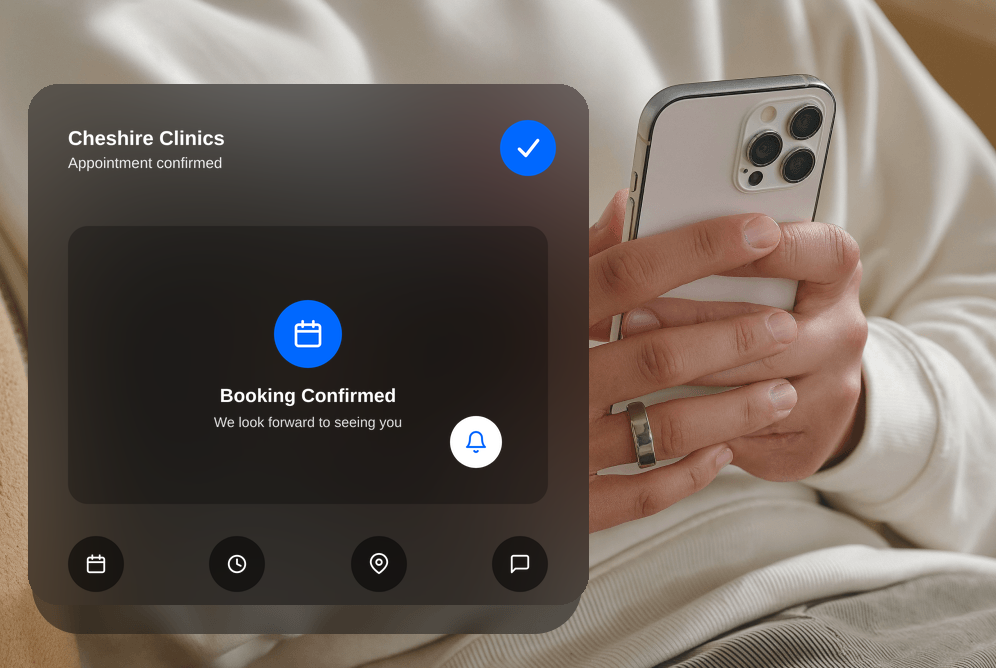
Cheshire Clinics online GP appointment booking confirmation on mobile
01

Book your appointment

Pick a time that suits you — 6am to 10pm, seven days a week, including weekends and bank holidays. £40 for 20 minutes, self-pay, with no insurance to arrange.
5–10 minutes
Online video consultation with a GMC-registered private GP
02

Meet your GP

A 20-minute video or phone consultation with a GMC-registered GP — long enough for a proper conversation about your symptoms, your history and what matters to you.
20 minutes
Diagnostic testing plan including blood test panel, ECG and urine screening
03

Tests and referrals, if you need them

Where testing will actually answer the question, we arrange it — blood tests and health screening through our laboratory partner, or a referral for ultrasound, X-ray, CT or MRI through private imaging providers. We will also tell you when a scan is not the right next step.
1–7 days
Personalised results and treatment plan from a private GP consultation
04

Results and next steps

Your GP talks you through what the results mean and agrees the next step with you. Every consultation ends with your treatment plan in writing, and any prescription goes to your own pharmacy.
20 minutes
GP follow-up reminder for ongoing care and progress monitoring
05

Ongoing care and follow-up

Follow-up appointments, progress monitoring and ongoing advice — including saying plainly when something needs in-person or NHS care instead.

Ongoing

How we compare

Time to be seen

Appointment length

Your NHS record in the room

Written treatment plan

Told when a test isn’t needed

Cost

Varies by practice

Typically 10 minutes

Yes, your full record

Not routinely

Usually

Free

Same day

Often 10 to 15 minutes

Usually not

Sometimes charged

Varies by provider

Often a subscription

Questions about our service

How quickly can I be seen?

Same-day access is usually available, from 6am to 10pm, seven days a week. You choose a time that suits you rather than waiting on hold at 8am.

Will I see the same doctor each time?

Yes. Care is led personally by Dr Mohammad Khan, so you are not passed between clinicians. Continuity is the point of a small practice: someone who knows your history and is listening attentively rather than working through a checklist.

Can you see my NHS records?

Yes, with your consent. We can access your Summary Care Record during the consultation, so your current medications, allergies and significant history are in the room. That means fewer questions you have already answered elsewhere, and safer prescribing.

Are you trying to replace my NHS GP?

No. We are not here to replace GPs, only to support them. Your NHS practice remains responsible for your ongoing care, and with your consent we write to them after the consultation. We are useful when you need to be seen sooner, or want more time than a standard appointment allows.

What is included in the appointment?

Twenty unhurried minutes and a comprehensive assessment. A written treatment plan is included, along with any prescription, sick note or referral letter arising from the consultation, at no extra charge.

How much does it cost?

£40 for 20 minutes, self-pay. Membership is optional and never required. Priced for fairness, because we are not here to charge extortionate amounts for access to a doctor.

What does “treatable online” actually mean?

It means the diagnosis can usually be made from your history and photographs, and that treatment can be arranged safely without examining you. Where a condition is not marked treatable online, it is because examination is the diagnosis — listening to a chest, feeling an abdomen, examining an ear or a joint — or because a procedure or device is needed.

Can you prescribe antibiotics?

Yes, where there is a genuine bacterial infection — cellulitis, impetigo, bacterial urine infections, confirmed strep throat. We will also frequently tell you that you do not need one. Most sore throats, coughs, colds and earaches are viral, and an antibiotic gives you the side effects with none of the benefit.

What if the GP cannot help with what I need?

If your problem turns out to be genuinely outside what we can do remotely, the doctor will tell you straight away, point you to the right service, and refund your fee in full. We would rather do that than fill twenty minutes to justify the charge.

What should I do in an emergency?

Call 999 or go to A&E — do not book an online appointment and do not wait for a reply to an email. For urgent problems that are not emergencies, NHS 111 is available 24 hours a day, online or by phone, and can direct you to the right service.

Patient reviews

What our patients say

No reviews published yet.
Ready to see a GP?20 minutes with a GMC-registered doctor. £40, usually same day.
Book a consultation