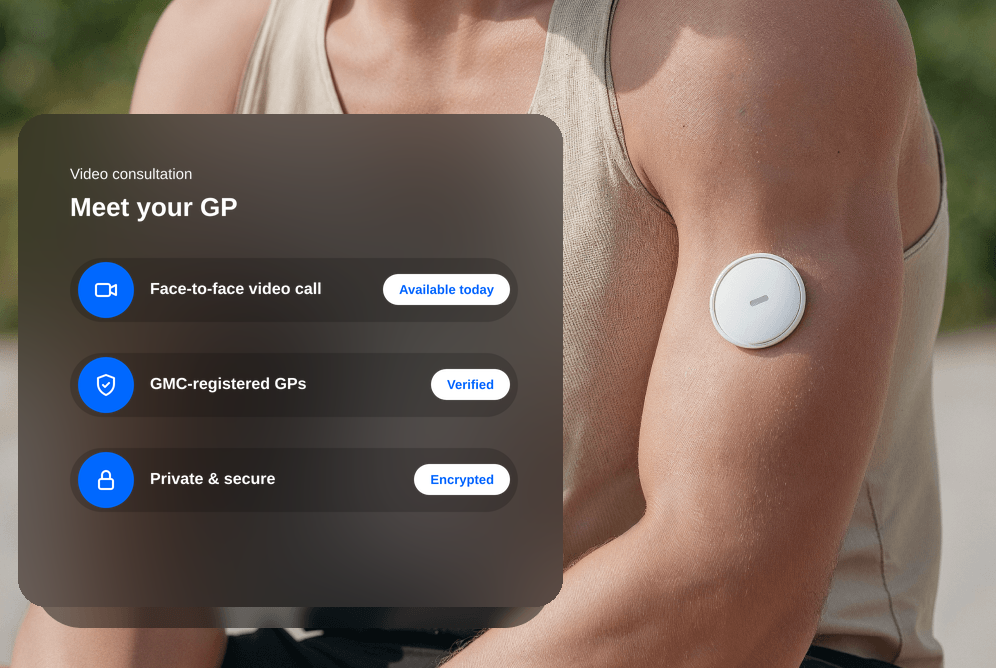
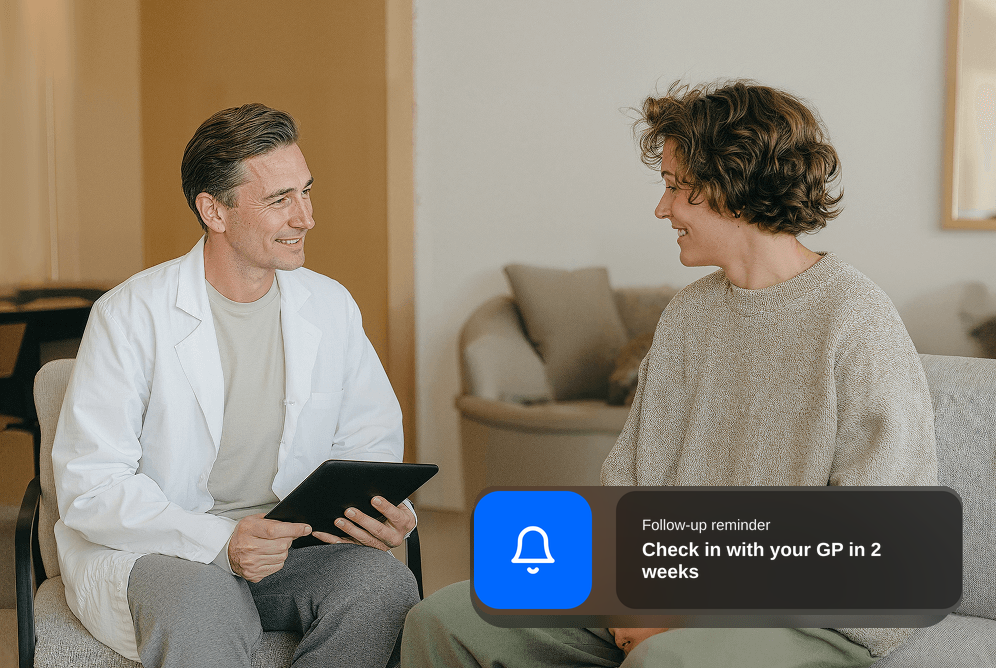
Yes. Video is the default because seeing you adds genuine clinical information — skin, colour, breathing, how you look in yourself — but telephone is available if you prefer it or if your connection is unreliable.
For anything visual, particularly skin conditions, video makes a real difference and photographs sent in advance help more still.
If a video call drops mid-consultation, the doctor will call you back. You will not lose your appointment or be asked to pay again.
When video genuinely matters
- Anything on the skin — rashes, moles, swellings, wounds
- Inhaler technique, which is wrong in a large proportion of people and cannot be checked any other way remotely
- Facial weakness, where whether the forehead moves is the whole diagnosis
- Anyone who is unwell, because how someone looks carries information that words do not
When the telephone is a perfectly good choice
Results discussions, medication reviews, mental health conversations and follow-ups all work well by phone.
Some people also simply talk more freely without a camera on, and that is a legitimate clinical reason rather than a compromise.
Privacy
You need somewhere you can speak honestly. A car parked somewhere quiet is a perfectly good consulting room and is used more often than you might think.
If someone else is in the room, the doctor will ask whether you are happy to speak in front of them — and will offer part of the appointment alone if you would rather.
Interpreters and adjustments
Tell us when you book if you need an interpreter, a British Sign Language interpreter, or any other adjustment. See languages and interpreting.
Arranged in advance it is straightforward. Raised on the day it usually means rescheduling, which helps nobody.