Home

/

Compare

/

Private Blood Test or Home Test Kit

Private Blood Test or Home Test Kit

Finger-prick kits are convenient and genuinely useful for some tests. For others they are actively misleading.

£40 · 20 minutes

Same-day availability

6am to 10pm, seven days

Prices checked against the source, with the date shown

We say plainly where the other option is stronger

Verifiable facts only — no logos, no adjectives

Clinically reviewed by a GMC-registered GP

Clinically reviewed by Dr Mohammad Khan · Last reviewed

August 30, 2026

Book a consultation

A 20-minute appointment with a GMC-registered GP for £40. Same-day appointments are usually available, 6am to 10pm, seven days a week.

Private GP care led personally by Dr Mohammad Zubair Khan, GMC 7563469.

Why patients choose Cheshire Clinics

GMC registered doctors badge - every Cheshire Clinics consultation is with a General Medical Council registered GP

GMC-registered

Care led personally by Dr Khan

Royal College of General Practitioners badge - RCGP trained private GP consultations at Cheshire Clinics

RCGP-trained

Attentive, unhurried care that listens properly

Google five star reviews badge - Cheshire Clinics private GP online

Highly rated by patients

Five-star Google reviews from the people we have looked after

Care Quality Commission registered badge - Cheshire Clinics online GP service is registered with the CQC, England's independent regulator of health and social care

CQC-registered

Registered with the Care Quality Commission

Same-Day Appointments
Sick Notes
Private Prescriptions
Blood Tests
Menopause & HRT
Weight Management
Mental Health
Specialist Referrals
Same-Day Appointments
Sick Notes
Private Prescriptions
Blood Tests
Menopause & HRT
Weight Management
Mental Health
Specialist Referrals

Overview

Home finger-prick kits are a real advance for some tests and a genuine problem for others, and the marketing rarely distinguishes between the two.

The difference is not the laboratory — many postal kits go to the same accredited labs. The difference is the sample. Squeezing a finger to fill a tube damages red cells, dilutes the sample with tissue fluid, and takes several minutes during which the blood begins to change.

For some analytes that does not matter. For others it changes the number enough to alter what you would do about it.

At a glance

Generally reliable from a finger-prick

  • HbA1c
  • Cholesterol and lipids
  • Vitamin D
  • Thyroid function — usually acceptable
  • HIV and syphilis screening — validated postal kits perform well
  • PSA — generally acceptable
  • Ferritin — usually acceptable

Unreliable or frequently spoiled from a finger-prick

  • Potassium — falsely raised by red cell damage. A common and clinically significant error
  • Full blood count — platelet clumping and inaccurate counts are common
  • Liver enzymes — affected by haemolysis
  • Anything where the sample sat in the post over a warm weekend

The recurring practical problem

Insufficient sample. Filling the tube from a finger is harder than it looks, and a partly filled tube is either rejected or run on too little blood.

Price check

Consultation £40; test priced by the laboratory

Varies by provider and panel

View the source

Where Cheshire Clinics is stronger

The result comes with someone to interpret it

This is the main difference, and it matters more than the sample. A postal kit returns a PDF with numbers, reference ranges, and often a generic comment. It does not know your history, your medicines, or your symptoms.

A slightly abnormal number means something quite different in a 30-year-old with no symptoms than in a 65-year-old on three medicines.

The right test, chosen before it is done

Large panels are sold because they are easy to sell, not because they are useful. A consultation first establishes which tests would actually change what happens next — which is frequently fewer than the panel contains.

Venous samples where they matter

Where the test needs a proper venous sample, we arrange one. A repeated abnormal potassium from a finger-prick causes real anxiety and often ends in a venous test anyway.

Someone accountable for the follow-up

An abnormal result needs a plan. We provide one, and a written summary for your own GP.

We can interpret kit results too

If you have already used a kit, bring the results — we will interpret them rather than insisting on repeating everything.

Where they are stronger

Convenience, genuinely

No appointment, no travel, no needle in the arm, done at your kitchen table. For someone who struggles to attend appointments or dislikes venepuncture, that is a real advantage rather than a marketing point.

Cheaper for a single straightforward test

If you want an HbA1c or a cholesterol check and nothing else, a kit is usually cheaper than a consultation plus a test.

Privacy

For sexual health screening in particular, postal kits remove a barrier that stops people testing at all. That is a public health good, and validated postal HIV and syphilis kits perform well.

Free NHS postal kits exist

NHS sexual health services offer free postal STI kits in most areas, and the NHS bowel screening kit is free and posted to you. Use those before paying anyone.

Good for tracking a known number

Where a value is already established and you simply want to watch it over time, a kit is reasonable.

Still deciding?

Book a consultation

Who each suits best

A home kit suits you if

  • You want one or two specific tests from the reliable list
  • You are screening for STIs — and check whether your NHS service offers it free first
  • You dislike or struggle with venous blood tests
  • You are monitoring a number that is already known and stable
  • Privacy matters to you

Come to us if

  • You have symptoms — symptoms need a diagnosis, not a panel
  • You want to know which tests are actually worth doing
  • You have a result you do not understand, from any source
  • You need potassium, a full blood count or liver enzymes, which need a venous sample
  • An abnormal result needs acting on
  • You are considering a large panel and want an honest view on whether it is worth it

How to decide

Ask what you would do differently

If a result would not change anything, the test is not worth doing at any price. That is the question worth answering before you buy either option.

Check the free routes first

If a test is clinically indicated, your NHS GP will do it free — and NHS sexual health and bowel screening kits are free and postal. We will say so rather than sell you something available for nothing.

Match the sample to the test

Finger-prick for HbA1c, lipids, vitamin D, thyroid and STI screening: reasonable.

Venous for potassium, full blood count and liver enzymes: necessary. A kit result for these is frequently wrong in a direction that causes alarm.

Be sceptical of large panels

The more tests you run on a well person, the more likely you are to find something abnormal that means nothing. Every incidental finding then needs chasing, and that cascade has its own costs — financial and otherwise.

If you have already tested

Bring the results. Interpreting what you have is usually better value than repeating it.

Common questions

Are home kits accurate?

It depends entirely on which test. The laboratory is usually the same; the sample is not. HbA1c and cholesterol are fine. Potassium and full blood count frequently are not.

Why was my potassium high on a home kit?

Almost always because squeezing the finger damaged red cells and released potassium into the sample. It is one of the commonest false alarms from kits, and it needs a venous repeat rather than worry.

My kit said my sample was insufficient. Why?

Filling the tube from a finger is genuinely difficult. Warm hands, hang the arm down first, and use the side of the fingertip rather than the pad.

Should I buy a big panel to check everything?

Generally no. In a well person, broad panels mainly generate borderline results that lead to more tests. Targeted testing based on symptoms and risk is better medicine and usually cheaper.

Will you interpret a kit result I already have?

Yes, and that is often the most useful thing we can do — including telling you which of the numbers can be trusted.

Are postal STI kits reliable?

Validated ones perform well and are a genuinely good option. Check your NHS sexual health service first, as they are usually free. Very recent exposure can still give a negative result, so timing matters.

Dr Mohammad Zubair Khan, GMC-registered private GP and founder of Cheshire Clinics

Clinically reviewed by Dr Mohammad Zubair Khan, GMC 7563469

Last reviewed

August 30, 2026

How it works

What happens when you book

£40 for a 20-minute appointment with a GMC-registered GP, 6am to 10pm, seven days a week. Membership is optional and never required.
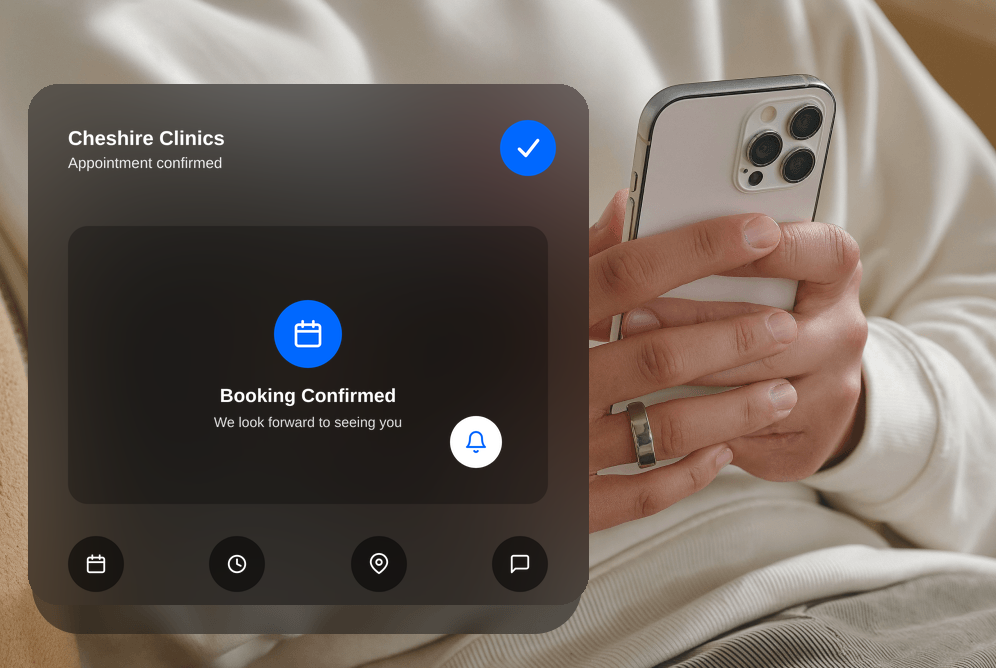
Cheshire Clinics online GP appointment booking confirmation on mobile
01

Book your appointment

Pick a time that suits you — 6am to 10pm, seven days a week, including weekends and bank holidays. £40 for 20 minutes, self-pay, with no insurance to arrange.
5–10 minutes
Online video consultation with a GMC-registered private GP
02

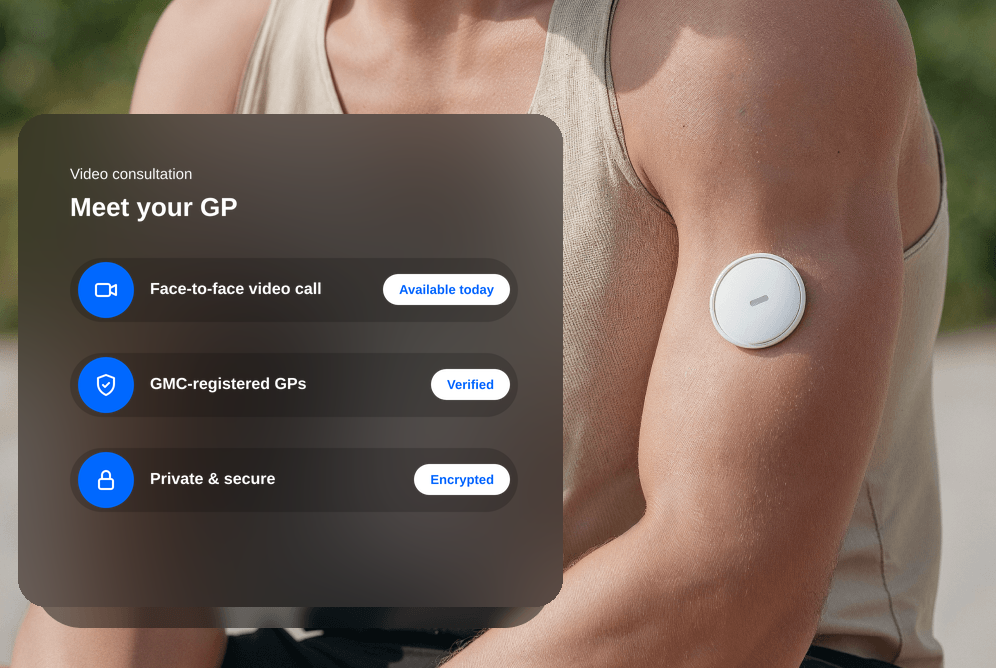
Meet your GP

A 20-minute video or phone consultation with a GMC-registered GP — long enough for a proper conversation about your symptoms, your history and what matters to you.
20 minutes
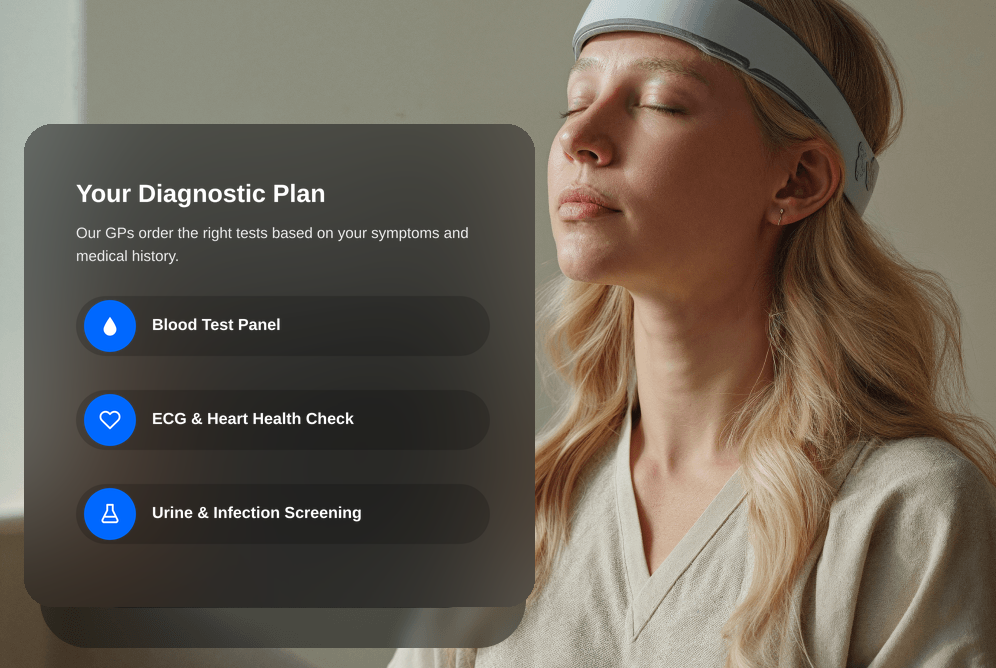
Diagnostic testing plan including blood test panel, ECG and urine screening
03

Tests and referrals, if you need them

Where testing will actually answer the question, we arrange it — blood tests and health screening through our laboratory partner, or a referral for ultrasound, X-ray, CT or MRI through private imaging providers. We will also tell you when a scan is not the right next step.
1–7 days
Personalised results and treatment plan from a private GP consultation
04

Results and next steps

Your GP talks you through what the results mean and agrees the next step with you. Every consultation ends with your treatment plan in writing, and any prescription goes to your own pharmacy.
20 minutes
GP follow-up reminder for ongoing care and progress monitoring
05

Ongoing care and follow-up

Follow-up appointments, progress monitoring and ongoing advice — including saying plainly when something needs in-person or NHS care instead.

Ongoing

Questions about our service

How quickly can I be seen?

Same-day access is usually available, from 6am to 10pm, seven days a week. You choose a time that suits you rather than waiting on hold at 8am.

Will I see the same doctor each time?

Yes. Care is led personally by Dr Mohammad Khan, so you are not passed between clinicians. Continuity is the point of a small practice: someone who knows your history and is listening attentively rather than working through a checklist.

Can you see my NHS records?

Yes, with your consent. We can access your Summary Care Record during the consultation, so your current medications, allergies and significant history are in the room. That means fewer questions you have already answered elsewhere, and safer prescribing.

Are you trying to replace my NHS GP?

No. We are not here to replace GPs, only to support them. Your NHS practice remains responsible for your ongoing care, and with your consent we write to them after the consultation. We are useful when you need to be seen sooner, or want more time than a standard appointment allows.

What is included in the appointment?

Twenty unhurried minutes and a comprehensive assessment. A written treatment plan is included, along with any prescription, sick note or referral letter arising from the consultation, at no extra charge.

How much does it cost?

£40 for 20 minutes, self-pay. Membership is optional and never required. Priced for fairness, because we are not here to charge extortionate amounts for access to a doctor.

What does “treatable online” actually mean?

It means the diagnosis can usually be made from your history and photographs, and that treatment can be arranged safely without examining you. Where a condition is not marked treatable online, it is because examination is the diagnosis — listening to a chest, feeling an abdomen, examining an ear or a joint — or because a procedure or device is needed.

Can you prescribe antibiotics?

Yes, where there is a genuine bacterial infection — cellulitis, impetigo, bacterial urine infections, confirmed strep throat. We will also frequently tell you that you do not need one. Most sore throats, coughs, colds and earaches are viral, and an antibiotic gives you the side effects with none of the benefit.

What if the GP cannot help with what I need?

If your problem turns out to be genuinely outside what we can do remotely, the doctor will tell you straight away, point you to the right service, and refund your fee in full. We would rather do that than fill twenty minutes to justify the charge.

What should I do in an emergency?

Call 999 or go to A&E — do not book an online appointment and do not wait for a reply to an email. For urgent problems that are not emergencies, NHS 111 is available 24 hours a day, online or by phone, and can direct you to the right service.

Patient reviews

What our patients say

No reviews published yet.
Ready to see a GP?20 minutes with a GMC-registered doctor. £40, usually same day.
Book a consultation